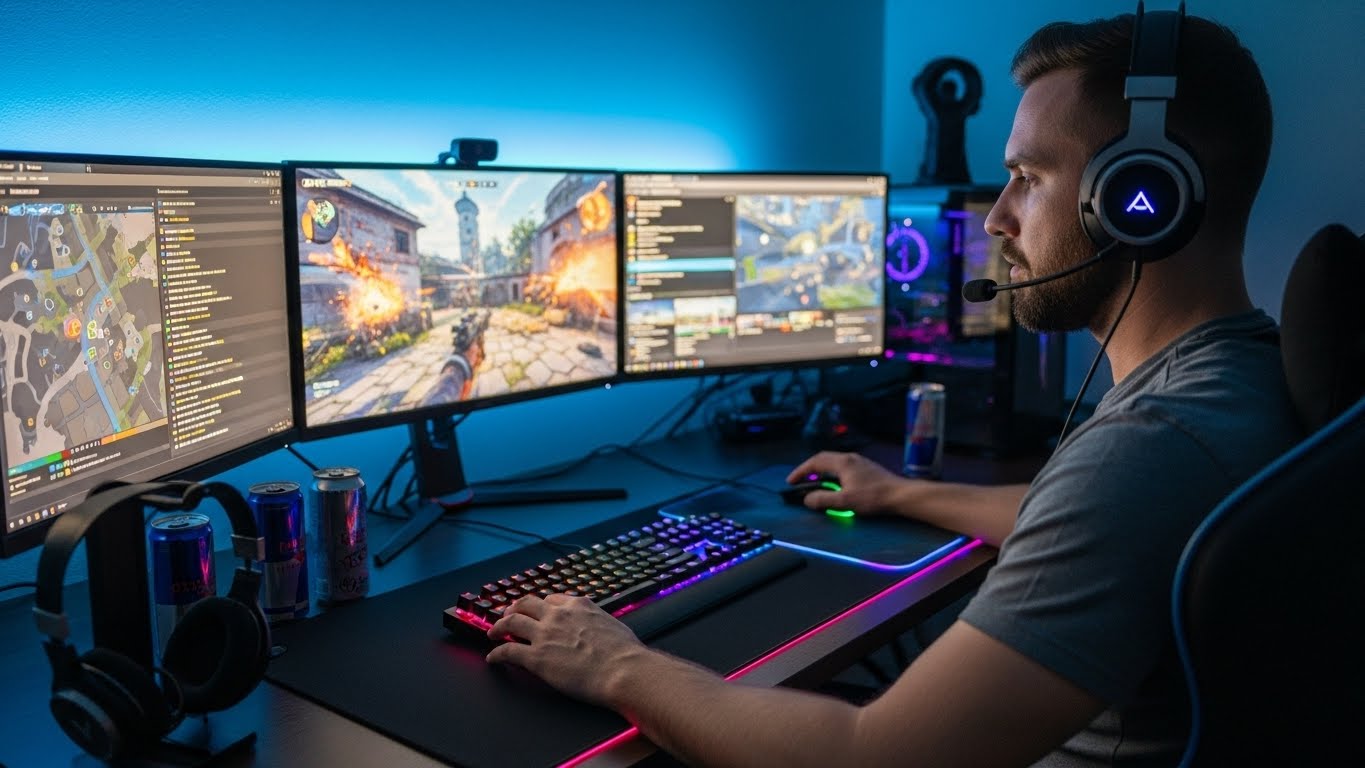

Introduction: The Rise of Gaming as a Global Phenomenon
In the last few decades, gaming has transformed from a niche hobby into a global cultural phenomenon. What was once an activity primarily enjoyed by a small subset of people has now become one of the most powerful and influential forms of entertainment worldwide. Whether it’s through console gaming, PC gaming, or mobile gaming, millions of people across the globe engage with games every single day. The industry has not only revolutionized the way we entertain ourselves but has also reshaped how we learn, connect, and even earn a living.
Games are no longer limited to children and teenagers. Today, people of all ages engage with video games, and the impact gaming has on modern society is undeniable. In this post, we will explore the world of gaming, its evolution over the years, its effects on culture, and what the future holds for this ever-expanding industry.
The History of Gaming: From Arcades to the Home Console Revolution
The roots of gaming can be traced back to the 1950s and 1960s when the first simple video games were created. These early games, such as Tennis for Two and Spacewar!, were developed by engineers and scientists who saw the potential of computers as an interactive medium. However, it wasn’t until the early 1970s, with the release of Pong by Atari, that video games became commercially successful.
Arcades quickly became the epicenter of gaming culture. People flocked to arcades to play games on machines that were often brightly lit and filled with beeping sounds, creating an almost magnetic attraction. Games like Pac-Man, Space Invaders, and Donkey Kong defined the golden age of arcades, drawing people from all walks of life to compete for high scores.
In the 1980s, home video game consoles, such as the Atari 2600 and the Nintendo Entertainment System (NES), brought gaming into the living room. For the first time, players could experience high-quality games without leaving their homes. The success of the NES paved the way for iconic franchises such as Super Mario, The Legend of Zelda, and Metroid, which would become mainstays of the gaming world.
The Evolution of Gaming Technology: From Pixels to Photorealism
One of the key factors behind the evolution of gaming has been advancements in technology. What began as simple, pixelated graphics has transformed into visually stunning worlds that rival real-life environments. The early days of gaming were defined by simple 2D graphics and basic sound effects. However, as computer processors and graphics cards improved, games began to feature more complex visuals and richer gameplay experiences.
The 1990s marked the transition from 2D to 3D gaming. With the release of consoles like the Sony PlayStation and the Nintendo 64, developers were able to create fully three-dimensional worlds that allowed players to explore environments in ways that had never been possible before. Games like Super Mario 64 and The Legend of Zelda: Ocarina of Time became benchmarks for what 3D gaming could achieve, and they set the standard for generations of games to follow.
As technology continued to improve, so did the fidelity of game graphics. The early 2000s saw the introduction of more powerful consoles, such as the Xbox 360 and PlayStation 3, which brought high-definition graphics and expansive open-world environments to the forefront. Games like Grand Theft Auto IV and The Elder Scrolls V: Skyrim pushed the boundaries of what was possible in terms of scale, detail, and interactivity.
The current generation of consoles, including the PlayStation 5 and Xbox Series X, has brought about a new level of photorealism in gaming. With the advent of ray tracing technology, realistic lighting effects, and lifelike character animations, modern games are more immersive than ever before. Titles such as The Last of Us Part II and Red Dead Redemption 2 have set new standards for visual quality and storytelling, blurring the line between video games and films.
The Impact of Online Gaming: Changing How We Play Together
One of the most revolutionary changes in the gaming industry has been the advent of online multiplayer gaming. With the rise of the internet and broadband connections, players no longer needed to be in the same room to play together. Online multiplayer games allow players to connect with others around the world in real-time, creating new social dynamics and opportunities for collaboration and competition.
In the late 1990s and early 2000s, games like StarCraft and Diablo II were pioneers in the online gaming space. These games allowed players to connect via dial-up modems, opening the door for a new era of competitive gaming. The launch of World of Warcraft in 2004 marked a turning point in the evolution of online gaming, as it introduced a massively multiplayer online role-playing game (MMORPG) with millions of players from around the world interacting in a single virtual world.
As broadband internet became more accessible, online gaming grew exponentially. Today, games like Fortnite, League of Legends, and Call of Duty dominate the gaming landscape, attracting millions of players every day. Online gaming has created vibrant communities where players can join teams, chat, strategize, and share their experiences. For many, these online worlds have become a second home, where friendships are formed, and players compete for glory and prizes.
Mobile Gaming: Accessibility for All
The rise of smartphones in the last decade has brought gaming to the palm of everyone’s hand. Mobile gaming has made it possible for people to play games wherever they are, whether they are commuting, waiting in line, or relaxing at home. Titles like Angry Birds, Candy Crush Saga, and Clash of Clans have become household names, attracting millions of players who might never have picked up a console or PC game.
Mobile gaming has also made gaming more accessible than ever before. With easy-to-understand mechanics, simple controls, and short play sessions, mobile games are designed to be enjoyed by a broad audience. Mobile games cater to all ages, making gaming a part of everyday life for people of all generations. This accessibility has led to the rise of free-to-play models, where players can enjoy games without spending a dime, but have the option to purchase in-game items, which has proven to be highly lucrative for developers.
Esports: Competitive Gaming on a Global Stage
The rise of esports has added a whole new dimension to gaming, turning it from a casual pastime into a professional sport. Esports refers to organized, multiplayer video game competitions, particularly between professional players, individually or as teams. Games like League of Legends, Dota 2, Counter-Strike: Global Offensive, and Fortnite have become staples of the esports scene, with professional players competing for large cash prizes and global recognition.
The rise of esports has been fueled by live streaming platforms like Twitch and YouTube, where fans can watch their favorite players and teams compete in real-time. Esports tournaments have become huge events, with millions of viewers tuning in to watch live broadcasts, and even larger numbers following online. Major esports tournaments, such as The International for Dota 2 and the League of Legends World Championship, draw crowds in the thousands, with prize pools reaching millions of dollars.
Esports has become a viable career option for many players, coaches, analysts, and content creators. The esports industry has attracted sponsorships from major companies and partnerships with traditional sports organizations. Professional esports teams are now household names, and the industry continues to grow at a rapid pace, with new games, tournaments, and leagues being introduced every year.
The Social and Cultural Impact of Gaming
Gaming has had a profound impact on social interaction and culture. Online multiplayer games have created new ways for people to connect with one another, building communities that extend across the globe. These communities transcend geographical boundaries, bringing together people from different backgrounds, cultures, and languages. Through gaming, individuals can forge friendships, collaborate on projects, and form lasting relationships.
Gaming has also had a significant influence on pop culture. Video games like Super Mario, The Legend of Zelda, and Minecraft have become icons, appearing in movies, TV shows, and even merchandise. The characters, stories, and worlds from video games have transcended the screen to become a part of mainstream culture.
Moreover, games are increasingly being used as tools for education and social change. Educational games are helping children learn subjects such as math, history, and language through interactive play. Games are also being used to raise awareness about important social issues, such as mental health, climate change, and inequality. Through immersive storytelling and gameplay, games have the power to inspire empathy and encourage players to think critically about the world around them.
The Future of Gaming: What Lies Ahead
The future of gaming is an exciting one, with new technologies and trends shaping the industry in unprecedented ways. Virtual reality (VR) and augmented reality (AR) are two of the most promising areas of development. VR allows players to immerse themselves fully in digital worlds, while AR blends the real world with digital elements, offering a unique, interactive experience.
Cloud gaming is also poised to change the gaming landscape. Services like Google Stadia and Xbox Cloud Gaming are making it possible for players to stream games directly to their devices, eliminating the need for powerful hardware. This will open up gaming to a wider audience, allowing people to play high-quality games on smartphones, tablets, and laptops without the need for expensive consoles or PCs.
As technology continues to improve, the future of gaming will undoubtedly bring more immersive, innovative, and accessible experiences. Whether through VR, AR, or cloud gaming, the possibilities for the future of gaming are limitless.