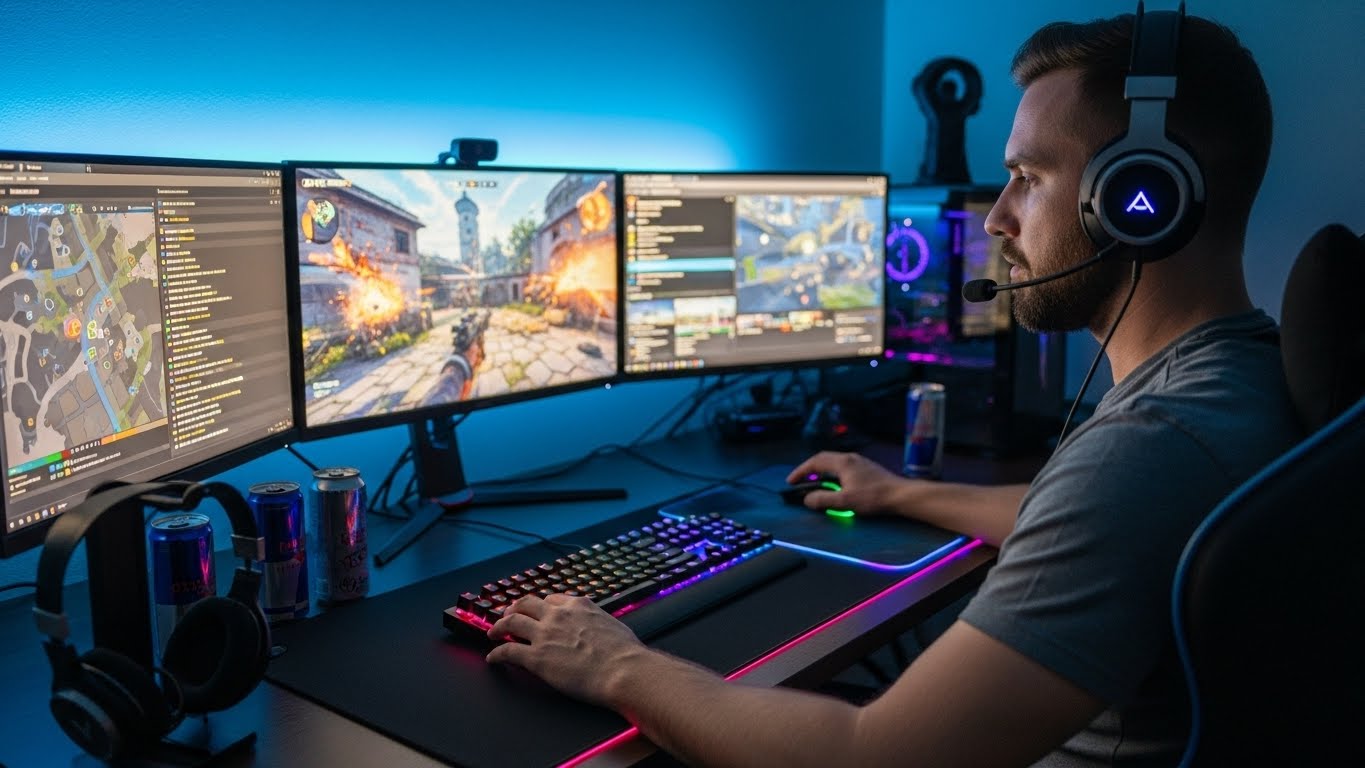
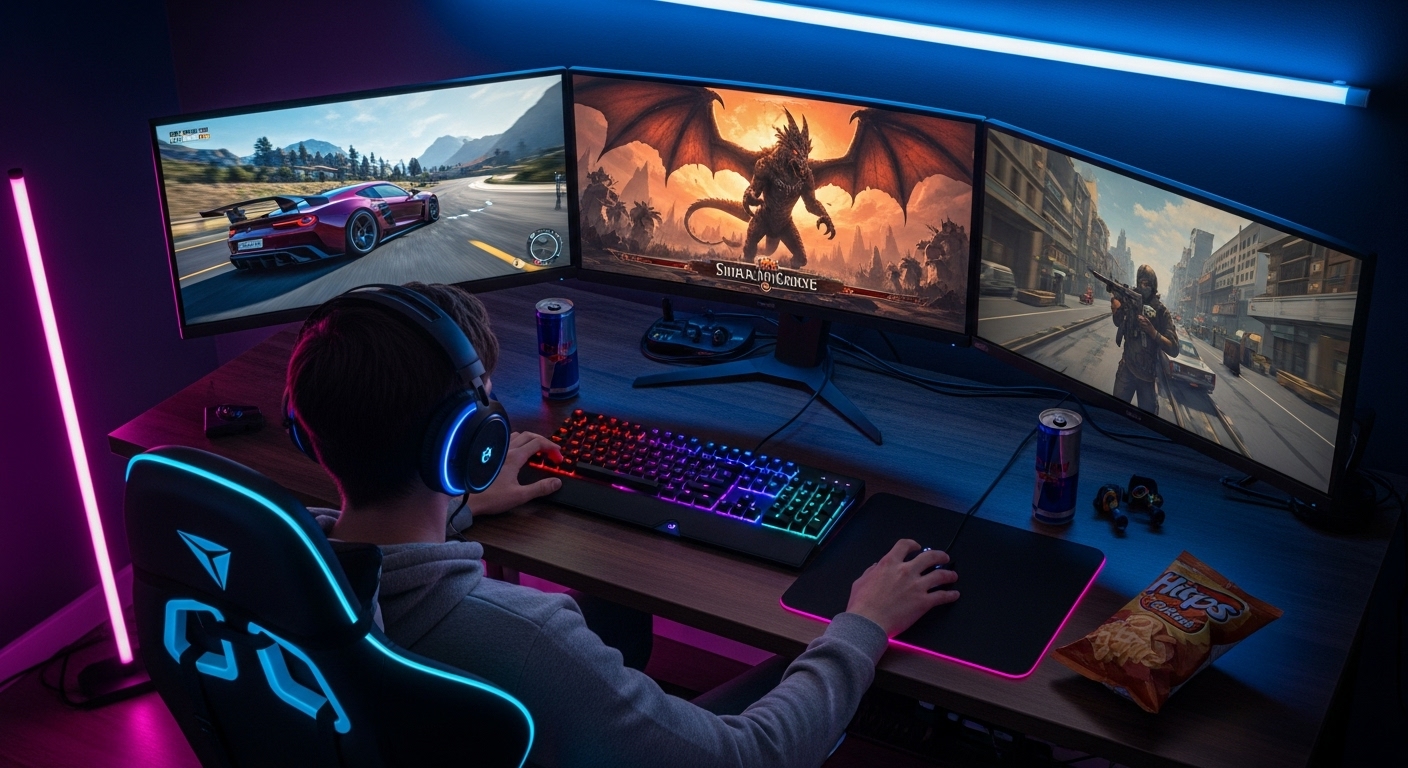
Gaming has come a long way since its humble beginnings, evolving into a multi-billion-dollar industry that engages millions of players worldwide. From the simple pixelated graphics of the early arcade games to the hyper-realistic environments of modern-day AAA titles, video games have undergone a profound transformation. In this blog post, we will explore the journey of gaming, examining its history, its cultural impact, and the future of this ever-changing medium.
The Birth of Gaming: A Simple Beginning
The origins of video gaming can be traced back to the 1950s and 1960s when computer scientists and engineers began experimenting with interactive systems. However, it wasn’t until the early 1970s that gaming as we know it today started to take shape.
The Arcade Era
The first major breakthrough in gaming came in 1972 with the release of Pong, an arcade game developed by Atari. Pong was a simple simulation of table tennis, where players controlled paddles to hit a ball back and forth. Despite its basic mechanics, Pong was a massive hit, sparking the rise of arcade gaming. By the mid-1970s, arcades were filled with games like Space Invaders, Asteroids, and Pac-Man, each one pushing the boundaries of what video games could offer.
Early Home Consoles
While arcades dominated the 1970s and 1980s, the home console market began to emerge. In 1977, Atari released the Atari 2600, which allowed players to enjoy games in the comfort of their own homes. The console’s success marked the beginning of the home gaming revolution. Despite facing competition from systems like the Intellivision and ColecoVision, the Atari 2600 remains one of the most iconic consoles of its time.
However, the early days of home consoles were not without challenges. In the early 1980s, the video game industry faced a major crash, driven by a glut of low-quality games and the collapse of major gaming companies. It was a tough time for the industry, but it also set the stage for a more refined gaming experience in the years to come.
The Rise of Modern Gaming: A New Era
By the late 1980s and early 1990s, the video game industry had started to recover. Advancements in technology and a focus on improving gameplay mechanics led to the birth of more sophisticated gaming experiences. This period saw the introduction of iconic consoles and games that would go on to define modern gaming.
The Age of 16-Bit Consoles
The Super Nintendo Entertainment System (SNES) and the Sega Genesis were released in the early 1990s and marked the rise of 16-bit gaming. These consoles introduced players to deeper and more complex games, with improved graphics, sound, and gameplay.
One of the standout titles of this era was Super Mario World, which showed the potential for side-scrolling platformers. Meanwhile, games like Sonic the Hedgehog and Street Fighter II helped cement Sega and Nintendo as the two dominant forces in the gaming world.
This was also the time when RPGs (role-playing games) began to gain mainstream popularity. Titles like Final Fantasy VI and Chrono Trigger offered intricate storylines, deep character development, and strategic gameplay that captivated players for hours on end.
The Shift to 3D Graphics and the Rise of PlayStation
The next major leap in gaming came with the advent of 3D graphics, made possible by more powerful hardware. In 1994, Sony entered the gaming market with its PlayStation console, which revolutionized the industry. The PlayStation’s ability to render 3D environments opened up a whole new world of gaming possibilities.
Games like Gran Turismo, Crash Bandicoot, and Final Fantasy VII were some of the first to showcase the power of 3D graphics. These games featured fully realized worlds, rich storytelling, and immersive gameplay that captivated millions of players.
The PlayStation also introduced the concept of CD-based games, allowing for larger, more detailed games with expansive soundtracks and high-quality voice acting. This shift marked the beginning of the modern era of gaming, where cinematic experiences became just as important as gameplay.
The Console Wars: Xbox vs. PlayStation
In the early 2000s, the rivalry between Sony’s PlayStation and Microsoft’s Xbox began to heat up. With the release of the PlayStation 2 and Xbox, the battle for dominance in the gaming console market was on. Both consoles offered incredible hardware and a vast library of games, but each had its unique selling points.
The PlayStation 2 became the best-selling console of all time, thanks in part to its vast game library, backward compatibility with PlayStation 1 games, and the introduction of DVDs as a medium for game storage. Meanwhile, the Xbox was praised for its powerful graphics and online multiplayer capabilities, particularly with the launch of Xbox Live.
The rivalry between these two consoles continued with the release of the PlayStation 3 and Xbox 360, both of which introduced HD graphics, online services, and an increasing emphasis on digital distribution of games. As the console wars raged on, gaming became more than just a pastime—it had become a global cultural phenomenon.
The Evolution of Online Gaming
In the early 2000s, online gaming began to grow rapidly. While some games like Quake and Unreal Tournament had already laid the groundwork for online multiplayer gaming, it was the launch of World of Warcraft in 2004 that truly changed the landscape of online gaming.
Massively Multiplayer Online Games (MMOs)
World of Warcraft became a massive success, attracting millions of subscribers and creating a whole new genre of games: the Massively Multiplayer Online (MMO) game. These games allowed players to interact with thousands of other players in expansive virtual worlds, offering an unprecedented level of social interaction and cooperative gameplay.
Other games, like EVE Online and Guild Wars, followed in World of Warcraft’s footsteps, further expanding the MMO genre. Online gaming also spurred the growth of esports, with professional leagues, tournaments, and live streaming becoming integral parts of the gaming culture.
The Rise of Free-to-Play and Mobile Gaming
As internet speeds increased and mobile devices became more powerful, a new era of gaming emerged: free-to-play games. Titles like League of Legends, Fortnite, and Apex Legends revolutionized the gaming industry by offering free access to the core game while monetizing through in-game purchases.
Mobile gaming, too, saw explosive growth, with titles like Angry Birds, Candy Crush, and Pokémon GO reaching millions of players worldwide. These games made gaming more accessible to people who didn’t own traditional gaming consoles or PCs, broadening the gaming demographic and further cementing gaming’s place in mainstream culture.
The Future of Gaming: Virtual Reality and Beyond
Looking to the future, the possibilities for gaming are more exciting than ever. The rapid advancements in technology are opening up new frontiers in how we experience games.
Virtual Reality (VR)
Virtual Reality (VR) has been touted as the next big thing in gaming, offering an immersive experience that allows players to step directly into their favorite games. While VR gaming is still in its early stages, the release of consoles like the Oculus Rift and PlayStation VR has brought the technology into the mainstream.
VR gaming offers the potential to change the way we interact with games entirely, from exploring virtual worlds to experiencing first-person gameplay in a way never seen before. As the technology improves and becomes more affordable, it’s likely that VR will become a staple of the gaming experience.
Cloud Gaming
Another exciting development in the gaming world is cloud gaming. Services like Google Stadia, Xbox Cloud Gaming, and Nvidia GeForce Now are making it possible to play high-quality games without needing expensive hardware. Instead of relying on powerful consoles or gaming PCs, players can stream games directly to their devices, allowing for gaming on a wider range of devices, from smartphones to smart TVs.
Cloud gaming could pave the way for a more democratized gaming industry, where access to high-end gaming experiences is no longer restricted by the need for costly equipment.
AI and Procedural Generation
Artificial intelligence (AI) and procedural generation are also likely to play an increasingly important role in the future of gaming. AI has the potential to create more dynamic and responsive game worlds, where NPCs (non-playable characters) can adapt to players’ actions and offer a more realistic experience. Procedural generation could lead to endless possibilities in terms of game design, with infinite, ever-changing worlds that players can explore.
Conclusion: The Enduring Power of Gaming
Gaming has come a long way since its inception, and it shows no signs of slowing down. What started as a simple pastime for a niche group of enthusiasts has blossomed into a global cultural phenomenon that has captured the hearts of millions. As technology continues to advance, gaming will continue to evolve, offering new experiences, new worlds, and new ways to connect with others.
Whether through the rise of VR, the growth of esports, or the development of cloud gaming, the future of gaming is bright. As long as there are stories to tell, worlds to explore, and challenges to overcome, gaming will remain a powerful and enduring form of entertainment for generations to come.