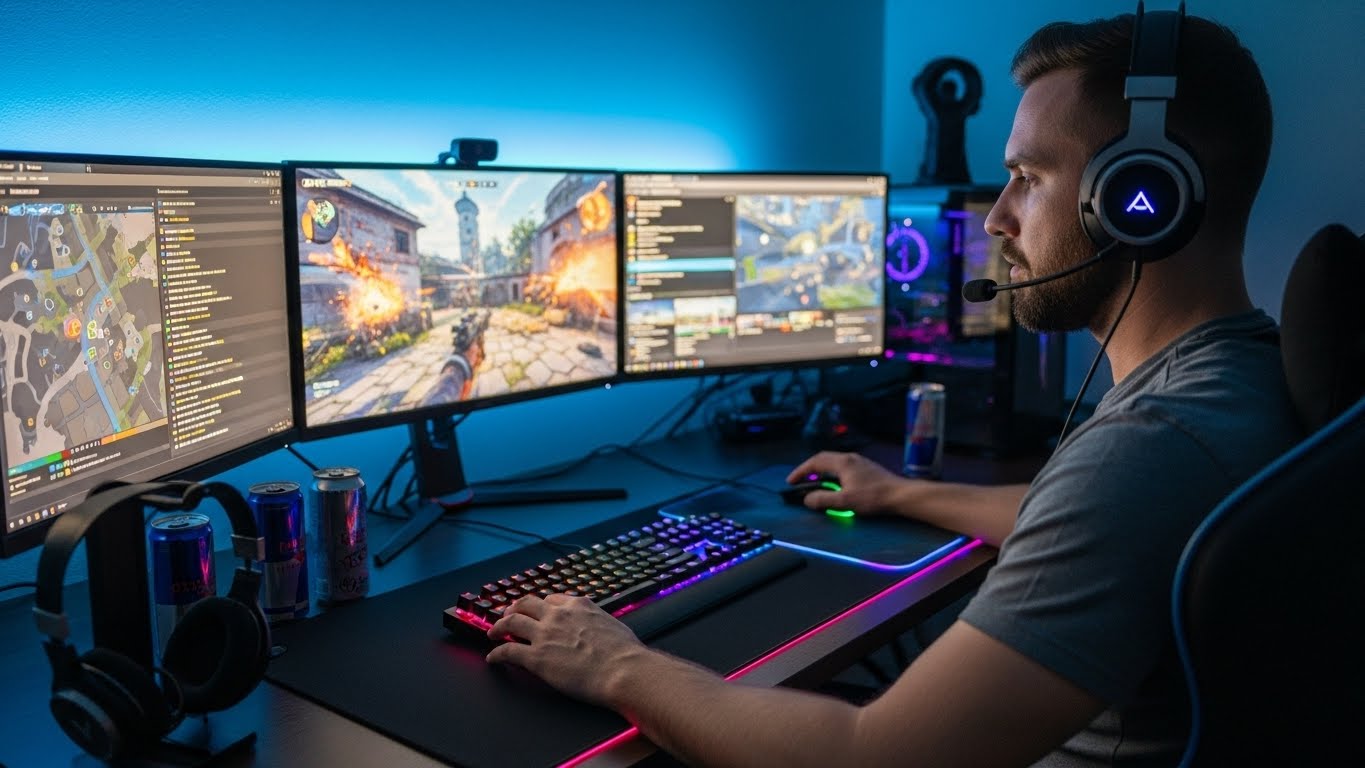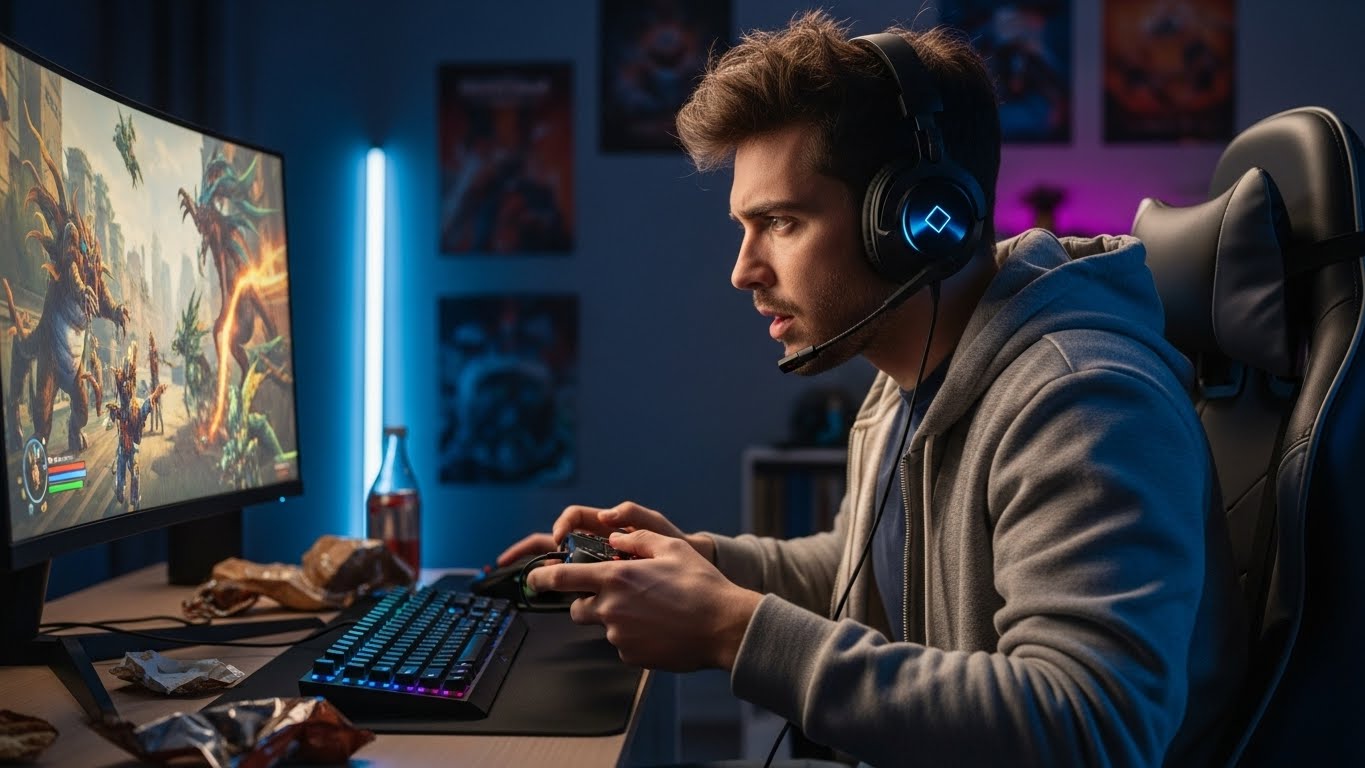
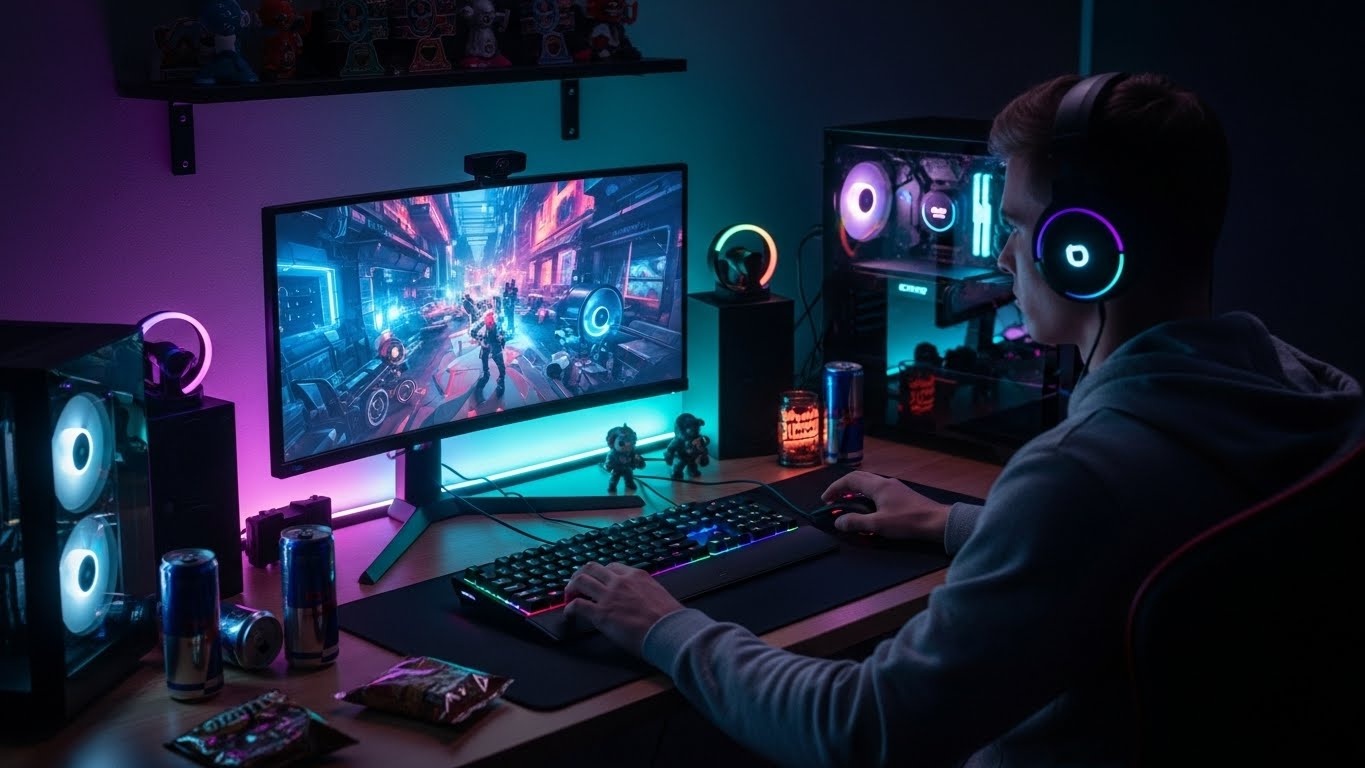
Gaming has evolved from a niche hobby into one of the largest and most dynamic entertainment industries in the world. Over the past few decades, video games have not only become more technologically advanced but also woven into the fabric of global culture. With new technologies, multiplayer experiences, and interactive narratives, gaming today is a vibrant, multifaceted phenomenon that has the power to shape everything from personal relationships to global economies. In this post, we will dive deep into the world of gaming—exploring its origins, growth, influence, and the factors contributing to its massive appeal.
The Origins of Gaming: A Humble Beginning
To truly understand the scale of gaming today, it’s important to look back at its roots. Video games emerged in the mid-20th century, initially as simple, pixelated experiments designed for niche audiences. One of the earliest examples was Spacewar! (1962), a two-player game created by Steve Russell on a PDP-1 computer. This groundbreaking game was the precursor to modern gaming, although it was not commercially available at the time.
In the 1970s, arcade games began to gain traction with the release of Pong in 1972. Developed by Atari, Pong was one of the first commercially successful video games and marked the beginning of the gaming industry’s growth. Following Pong, the gaming world saw the rise of iconic titles such as Pac-Man and Space Invaders in the late ’70s and early ’80s, which laid the foundation for the arcade gaming boom of the 1980s.
As personal computers became more accessible in the 1980s and 1990s, the rise of home gaming consoles like the Nintendo Entertainment System (NES) and Sega Genesis helped spread gaming into mainstream culture. These consoles provided players with rich, immersive experiences that they could enjoy in their own homes, which fundamentally changed the landscape of gaming forever.
The Golden Age of Gaming: From 3D to MMORPGs
The 1990s ushered in a new era of gaming. The introduction of 3D graphics marked a significant shift in how games were developed and experienced. Titles like Super Mario 64 (1996) and The Legend of Zelda: Ocarina of Time (1998) showcased the capabilities of 3D graphics and set new standards for storytelling, gameplay, and level design. The transition from 2D to 3D brought a greater sense of immersion and opened up new gameplay possibilities.
In addition to 3D graphics, the 1990s also witnessed the birth of multiplayer online gaming. One of the earliest and most notable examples was Doom (1993), which allowed players to connect over local networks to engage in competitive combat. This paved the way for future titles like Warcraft and EverQuest—the latter being one of the first massively multiplayer online role-playing games (MMORPGs). MMORPGs became a cultural phenomenon in the late 1990s and early 2000s, with World of Warcraft (2004) leading the charge and amassing millions of dedicated players.
The golden age of gaming also saw the rise of game developers as major cultural figures. Companies like Nintendo, Sony, and Microsoft introduced powerful consoles like the PlayStation, Xbox, and Nintendo 64, which further democratized gaming and cemented its place in mainstream entertainment.
The Modern Gaming Landscape: From Indies to Esports
The gaming industry today is more diverse than ever, with a vast array of genres, platforms, and gaming communities. With the advent of the internet, gaming has become an online social experience, and platforms like Twitch, YouTube, and Discord have allowed players to connect, share their experiences, and engage in esports competitions.
One of the most significant developments in recent years is the rise of indie games. Unlike big-budget titles from major studios, indie games are developed by small teams or even individuals. These games often prioritize creativity, innovation, and unique art styles over large-scale production values. Notable examples include Hollow Knight, Celeste, and Undertale, which have gained massive followings despite having modest budgets.
Indie games have introduced fresh concepts and narrative-driven experiences that often diverge from traditional mainstream gaming. They have played a pivotal role in challenging the status quo and demonstrating that games can be more than just entertainment—they can be art. With the proliferation of platforms like Steam and itch.io, indie game developers have a greater opportunity to reach global audiences without the need for a large publisher backing.
Another crucial aspect of modern gaming is the rise of esports. Competitive gaming has grown into a multi-billion-dollar industry, with professional tournaments, sponsorships, and live-streaming platforms driving its growth. Esports competitions like League of Legends Worlds, The International (Dota 2), and Fortnite World Cup attract millions of viewers worldwide. These events have transformed gaming into a spectator sport, where top players are celebrated like athletes, and organizations sign multi-million dollar sponsorship deals with brands.
The Cultural Impact of Gaming: Shaping Society
Gaming has had an undeniable impact on global culture. It has influenced not only entertainment but also social interactions, education, and even politics. With its interactive nature, gaming offers a unique form of engagement that allows players to become part of the stories they experience.
One of the most profound ways gaming has influenced culture is by providing a platform for global communities to come together. Multiplayer games, whether online or in-person, have enabled players to forge friendships and engage in collaborative experiences across geographic and cultural boundaries. Games like Minecraft and Fortnite have allowed millions of players to interact, build, and play together in ways that were previously unimaginable.
Gaming has also become a platform for social commentary and cultural expression. Titles like The Last of Us and Bioshock Infinite have tackled difficult topics such as war, inequality, and the human condition, while others have addressed political themes. The power of video games as a medium for storytelling and social impact has been increasingly recognized, with many games earning critical acclaim for their narrative depth and exploration of complex themes.
Moreover, gaming has played a central role in shaping youth culture. For many young people, gaming is an integral part of their identity, and it provides a shared language and social bond. This cultural influence has led to the creation of gaming conventions, fan art, online communities, and content creators who have become cultural icons in their own right. Platforms like Twitch and YouTube have made it possible for individuals to turn gaming into a career, whether through live-streaming, creating tutorials, or sharing game-related content.
The Future of Gaming: VR, AR, and AI
Looking ahead, the future of gaming holds incredible potential, with emerging technologies such as virtual reality (VR), augmented reality (AR), and artificial intelligence (AI) poised to redefine the gaming experience. VR and AR have already begun to make waves in the industry, with games like Half-Life: Alyx offering players an immersive, first-person experience that transports them directly into the world of the game. These technologies promise to break down the boundaries between the player and the game, offering unprecedented levels of immersion.
AI, on the other hand, has the potential to revolutionize how games are designed and played. From intelligent NPCs (non-playable characters) that react to player behavior in realistic ways to procedurally generated worlds, AI is pushing the limits of what’s possible in gaming. Games are becoming more dynamic, unpredictable, and personalized, allowing players to engage in experiences that are unique to them.
Cloud gaming is also expected to become more mainstream in the coming years. Services like Google Stadia (now defunct) and NVIDIA GeForce Now have demonstrated that players can access high-quality games without the need for expensive hardware. Cloud gaming makes it possible for anyone with an internet connection to stream and play games, potentially democratizing access to high-end gaming experiences.
Conclusion: A Cultural Force to Be Reckoned With
From its humble beginnings in arcades to its current position as a dominant force in global entertainment, gaming has undergone a remarkable transformation. It has not only evolved technologically but also cemented its place in popular culture, shaping how we socialize, learn, and entertain ourselves.
As gaming continues to grow and evolve, it will undoubtedly play an even more significant role in society, pushing the boundaries of creativity and innovation. Whether through immersive experiences, cultural expression, or competitive esports, the future of gaming looks brighter than ever.
Gaming is no longer just a pastime; it is a cultural movement—a new form of art, expression, and social interaction that will continue to captivate audiences for generations to come.