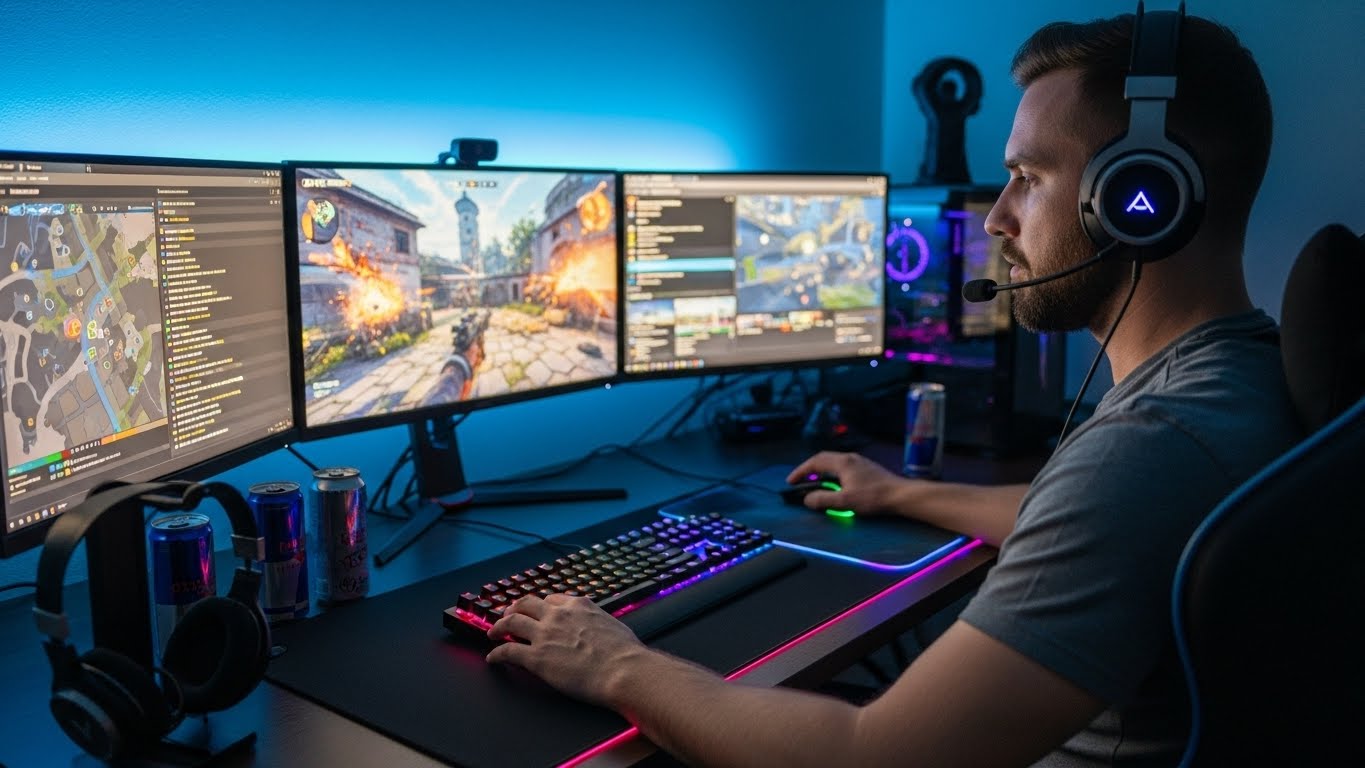

Gaming has grown far beyond its early days of simple screens and pixelated characters. From arcade cabinets and home consoles to immersive virtual reality experiences, gaming has become one of the most influential forms of entertainment in the world. It engages millions of players daily, shapes technology, fuels creativity, and even serves as a platform for social interaction and professional opportunities. Today, gaming is not just a pastime; it is a cultural, educational, and economic force that continues to evolve.
The Evolution of Gaming
Gaming’s journey began in the 1970s with arcade games and early consoles. Titles like Pong and Space Invaders offered straightforward challenges but captivated audiences worldwide. The appeal of achieving high scores, competing with friends, and mastering gameplay mechanics laid the foundation for a thriving industry.
As technology improved, gaming moved into a new era. The 1980s and 1990s introduced home consoles like the Nintendo Entertainment System and Sony PlayStation, which brought richer graphics and more complex game mechanics. Computer gaming grew alongside these consoles, allowing for strategy, role-playing, and simulation games that demanded critical thinking and creativity.
The turn of the century saw a leap in graphics, artificial intelligence, and online connectivity. Players could now explore vast open worlds, experience cinematic storytelling, and compete with others globally. Today, gaming exists across multiple platforms, from consoles and PCs to mobile devices and cloud services, making it more accessible than ever.
The Art of Storytelling in Games
Modern games are much more than entertainment; they are storytelling mediums. Narrative-driven games immerse players in rich plots, complex characters, and meaningful choices. Unlike movies or books, games allow players to influence the story, creating a unique and personal experience.
Role-playing and open-world games, in particular, offer expansive narratives that explore themes such as heroism, morality, loss, and identity. Players become participants rather than spectators, making choices that affect outcomes and emotional arcs. This interactive storytelling elevates gaming into a form of art capable of evoking deep emotional responses and reflection.
Storytelling in gaming has proven that the medium can educate and inspire. Through exploration, dialogue, and problem-solving, players develop empathy, critical thinking, and decision-making skills while enjoying a captivating experience.
Gaming as a Social Platform
One of gaming’s most significant impacts is its ability to connect people. Online multiplayer games, cooperative missions, and competitive esports create social communities where players collaborate, communicate, and build friendships. These interactions extend beyond gameplay, fostering long-term connections and shared experiences.
Gaming communities often revolve around shared passions for a specific title, genre, or playstyle. Players engage in forums, fan art, strategy discussions, and content creation, building a sense of belonging. These communities provide opportunities for self-expression, creativity, and collaboration.
The rise of esports has further amplified gaming’s social dimension. Professional competitions draw millions of spectators, and players form teams, develop strategies, and cultivate teamwork skills comparable to traditional sports. Gaming has become a global stage where talent, passion, and connection intersect.
Educational and Cognitive Benefits of Gaming
Gaming is increasingly recognized for its cognitive and educational value. Strategy games develop problem-solving, planning, and critical thinking skills, while puzzle games enhance memory and pattern recognition. Simulation games teach resource management, economic concepts, and complex systems thinking.
Beyond cognitive development, gaming encourages perseverance and adaptability. Players often face challenging scenarios that require trial and error, learning from mistakes, and refining strategies. These lessons carry over into real life, fostering resilience and confidence.
Educational institutions have adopted gamified learning, integrating game mechanics into lessons to make subjects like history, science, and mathematics more engaging. By leveraging interactive gameplay, educators can transform learning into an immersive and memorable experience.
Esports: Gaming as a Professional Arena
Competitive gaming, known as esports, has emerged as a billion-dollar industry with global reach. Professional players train rigorously, mastering strategies, mechanics, and teamwork to compete at the highest level. Major tournaments attract millions of viewers worldwide, showcasing skill, dedication, and entertainment.
Esports has created new career opportunities beyond playing professionally. Roles such as coaching, analysis, content creation, broadcasting, and event management have become viable paths for individuals passionate about gaming. Streaming platforms allow players to reach global audiences, turning personal gaming skills into professional careers.
The professionalization of gaming has reshaped public perception. No longer seen as mere entertainment, esports demonstrates that gaming can offer skill development, financial rewards, and global recognition.
Technology Driving Gaming Innovation
Technological advancement is at the core of gaming’s evolution. High-speed processors, advanced graphics, artificial intelligence, and cloud computing have made modern games more immersive and interactive than ever.
Virtual reality transports players into fully realized digital worlds, allowing them to interact physically with their environment. Augmented reality blends virtual elements with the real world, creating new experiences and gameplay possibilities. Artificial intelligence enhances non-player characters, enabling dynamic behavior and challenging opponents. Cloud gaming allows access to high-quality titles on devices with limited processing power, expanding access and convenience.
The integration of these technologies ensures that gaming continues to innovate, delivering experiences that are not only entertaining but also immersive, intelligent, and personalized.
Gaming as a Healthy Escape
For many, gaming serves as a mental and emotional escape. Immersive worlds provide an opportunity to relax, explore, and experiment without real-world consequences. These experiences can reduce stress, improve mood, and offer a sense of accomplishment.
Gaming also fosters creativity. Players design strategies, construct virtual worlds, and approach challenges in imaginative ways. This creative engagement stimulates the mind, encourages experimentation, and inspires problem-solving beyond the screen.
Moreover, gaming teaches patience, adaptability, and resilience. The repeated effort to overcome challenges in a game builds confidence and perseverance, skills that transfer to real-life situations.
Inclusivity and Representation in Gaming
The gaming industry has made significant strides toward inclusivity and representation. Today, games feature diverse characters, backgrounds, and narratives that reflect the broad spectrum of human experience. This diversity enhances storytelling, promotes empathy, and makes players feel represented in digital worlds.
Accessibility has also improved, with features like customizable controls, visual aids, subtitles, and adaptive difficulty settings. These enhancements allow players with disabilities to enjoy gaming fully, making the medium more inclusive and enjoyable for everyone.
Inclusivity in gaming fosters community growth, creativity, and engagement. By embracing diversity, developers ensure that gaming remains a space where all players can participate, connect, and thrive.
Gaming’s Cultural Impact
Gaming is more than an entertainment medium; it is a cultural force. It influences music, art, fashion, and language, shaping trends and social expression. Iconic characters, immersive worlds, and memorable quotes have permeated mainstream culture, becoming part of everyday life.
Streaming and content creation have amplified gaming’s cultural reach. Gamers share experiences, showcase creativity, and entertain global audiences, transforming gameplay into interactive storytelling and performance. Gaming culture fosters collaboration, innovation, and identity, proving that it is not just a pastime but a significant cultural phenomenon.
The Future of Gaming
The future of gaming promises limitless possibilities. Advances in artificial intelligence, virtual and augmented reality, cloud technology, and narrative design will continue to redefine the medium. Games will become more interactive, immersive, and personalized, offering experiences that adapt to individual players’ preferences and decisions.
Cloud and streaming technologies will make high-quality gaming accessible to more people, while virtual reality will create fully interactive and lifelike experiences. Storytelling will continue to evolve, offering deeper narratives, moral complexity, and emotional resonance.
Gaming’s role in society will expand, influencing education, culture, social interaction, and professional careers. The medium will continue to challenge boundaries, inspire creativity, and foster global communities.
Conclusion: Gaming as a Force for Growth and Connection
Gaming has grown from simple pixelated screens to a multifaceted, transformative medium. It entertains, educates, and connects millions of people worldwide. Through storytelling, community building, technological innovation, and professional opportunities, gaming has proven itself as a cultural, cognitive, and social powerhouse.
Whether experienced casually, competitively, or as part of a larger community, gaming offers something for everyone. It fosters creativity, resilience, and connection while providing a safe space for exploration and self-expression. As technology continues to advance and the industry evolves, gaming’s influence will only deepen, shaping lives and society in ways that extend far beyond the screen.
The world of gaming is vast, dynamic, and constantly evolving. Its potential is limitless, offering players opportunities to learn, connect, and grow while enjoying experiences that inspire and entertain. In this way, gaming is not just a pastime—it is a transformative force that continues to redefine entertainment, culture, and human connection.