
Introduction
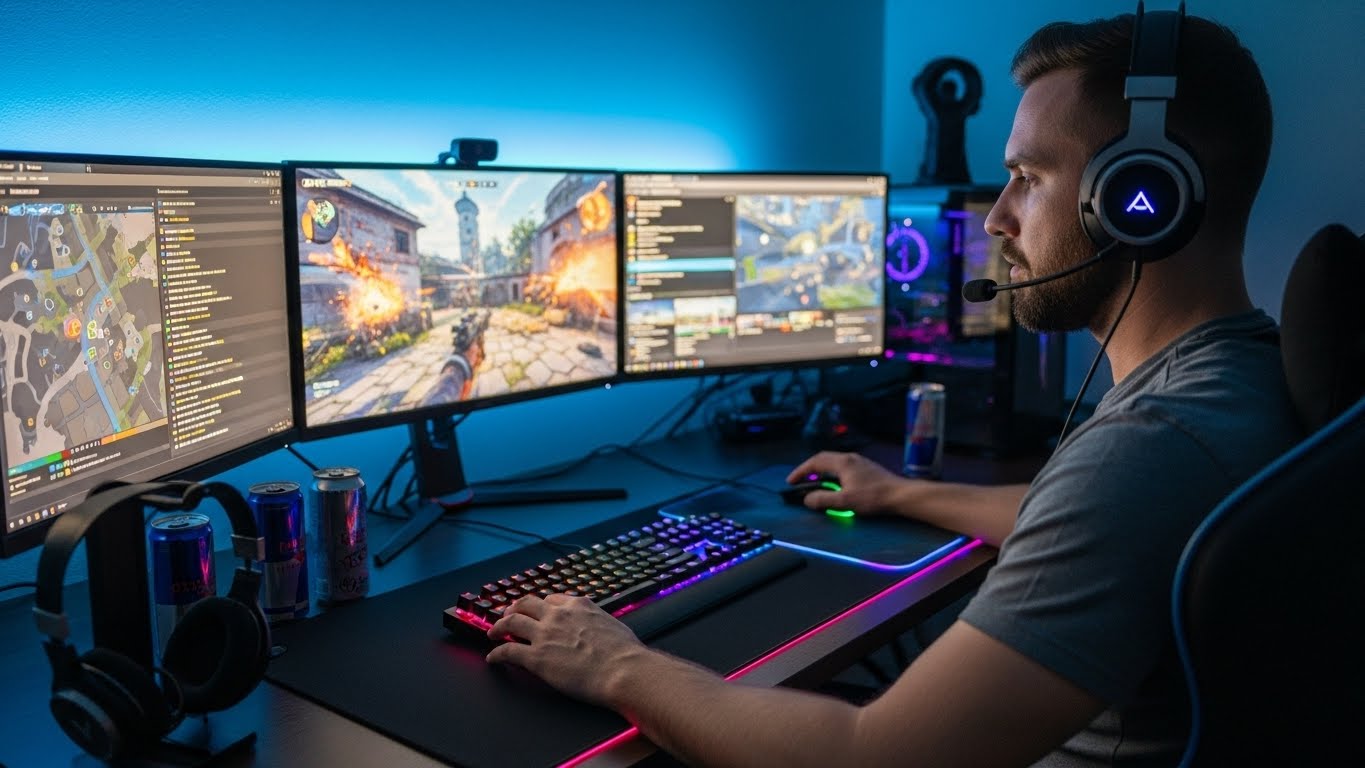
Gaming has come a long way from its humble beginnings as a niche hobby confined to arcades and early consoles. Today, it is a global cultural force, influencing entertainment, technology, social interaction, and even education. What was once considered merely a pastime has evolved into a multifaceted medium capable of storytelling, creativity, and immersive experiences. With millions of players worldwide, gaming is not just a form of entertainment; it has become a lifestyle, a career, and a community.
The Evolution of Gaming: From Pixels to Realism
The history of gaming is a fascinating journey. In the 1970s and 1980s, simple arcade games like Pong and Pac-Man captured the imagination of early gamers. These games were characterized by straightforward mechanics, pixelated graphics, and addictive gameplay loops. As technology progressed, consoles like the Nintendo Entertainment System and Sega Genesis brought gaming into homes, expanding its audience and laying the foundation for modern gaming culture.
The introduction of 3D graphics in the 1990s revolutionized gaming. Titles like Super Mario 64 and The Legend of Zelda: Ocarina of Time introduced players to expansive, immersive worlds that could be explored freely. These games demonstrated that video games could tell stories just as effectively as movies or books, sparking a shift in perception that gaming was more than just a pastime.
The Rise of Online Gaming and Multiplayer Communities
One of the most transformative developments in gaming has been the rise of online multiplayer experiences. Games like World of Warcraft, Counter-Strike, and League of Legends created communities of millions who connected, competed, and collaborated in shared virtual spaces. Online gaming transformed the way people interacted with games, turning solitary play into social experiences that could span continents.
These multiplayer communities also fostered new forms of competition and cooperation. Esports emerged as a professional arena where players could compete at the highest level, with millions watching live events, participating in tournaments, and following their favorite players as celebrities. Online gaming has created not just entertainment, but a new form of social connection, where friendships, teamwork, and rivalry thrive within digital worlds.
The Impact of Storytelling in Modern Games
While early games focused primarily on gameplay mechanics, modern games place a strong emphasis on narrative and emotional engagement. Storytelling in gaming has evolved to rival that of films and literature. Games like The Last of Us, Red Dead Redemption, and Cyberpunk 2077 immerse players in complex worlds filled with rich characters, moral dilemmas, and branching narratives.
Interactive storytelling allows players to make choices that influence the game’s outcome. This level of agency creates a unique bond between the player and the story, transforming gaming into a personal, emotionally resonant experience. The ability to step into the shoes of a protagonist and actively shape their journey is a defining characteristic of modern gaming.
The Technological Advancements Driving Immersion
Gaming has always been at the forefront of technological innovation. From high-resolution graphics to realistic physics engines, developers constantly push the boundaries of what games can achieve. Virtual reality (VR) and augmented reality (AR) have further expanded the immersive potential of gaming, creating experiences where players can interact with digital environments in ways previously unimaginable.
VR titles allow players to physically move, reach, and interact within a virtual world, creating unparalleled immersion. AR games, on the other hand, blend digital elements with the real world, encouraging players to explore and engage with their surroundings. These technologies have transformed gaming from a screen-based activity into a multisensory experience, raising the bar for interactivity and realism.
The Role of Mobile Gaming in Expanding the Audience
While console and PC gaming dominate in terms of complexity and immersion, mobile gaming has dramatically broadened the reach of the gaming industry. Smartphones and tablets have made gaming accessible to millions who may never own a console or gaming PC. Titles like Pokémon GO, Candy Crush, and Clash Royale have demonstrated that mobile games can combine addictive mechanics, social features, and casual accessibility to captivate a wide audience.
Mobile gaming has also democratized game development, allowing indie developers to reach global markets without the massive budgets required for traditional game production. The accessibility of mobile gaming has reshaped the industry, proving that innovation and engagement are not confined to high-end graphics or complex systems.
The Influence of Esports and Competitive Gaming
Esports has transformed gaming into a spectator sport. Professional players now compete for multi-million-dollar prizes, and major events attract live audiences and millions of online viewers. Titles like Dota 2, Fortnite, and Call of Duty have cultivated thriving competitive scenes, complete with teams, sponsors, and dedicated fanbases.
Esports has also created career opportunities beyond playing professionally. Commentators, analysts, event organizers, and content creators have all found a place in this rapidly growing industry. Competitive gaming demonstrates how gaming has transcended its traditional role, becoming an arena for skill, strategy, and community engagement on a global scale.
Social and Cultural Impacts of Gaming
Gaming’s influence extends beyond entertainment, impacting social behavior, culture, and education. Online communities foster friendships, collaboration, and teamwork. Games addressing social issues, historical events, or moral dilemmas encourage critical thinking and empathy. Titles like Papers, Please and This War of Mine challenge players to confront ethical decisions, demonstrating that games can educate while entertaining.
Gaming culture has also influenced fashion, music, and media. Cosplay, fan art, and online streaming communities have created new forms of creative expression, blurring the lines between gaming and other cultural domains. The impact of gaming on society is profound, shaping how people connect, create, and consume media.
The Economics of Gaming: Industry Growth and Innovation
The gaming industry is one of the fastest-growing entertainment sectors in the world. Revenue from games now surpasses that of movies and music combined. Developers invest heavily in research, technology, and creative talent, leading to a constant cycle of innovation. Subscription models, microtransactions, and downloadable content (DLC) have changed the economics of gaming, providing ongoing revenue streams and extending the life of games long after their release.
This economic growth has encouraged investment in indie games, experimental projects, and new technologies. The competition for player attention drives innovation, ensuring that gaming continues to evolve at a rapid pace.
The Future of Gaming: Trends and Innovations
The future of gaming promises even greater immersion, creativity, and accessibility. Cloud gaming is making high-quality games available without the need for expensive hardware, while artificial intelligence is enabling adaptive experiences that respond dynamically to player behavior. Mixed reality experiences, combining elements of VR, AR, and real-world interaction, will redefine the boundaries of what games can offer.
Social experiences will continue to play a central role, with shared worlds and multiplayer platforms blurring the lines between gaming and social networking. Storytelling will become even more interactive and personalized, offering experiences tailored to each player’s choices and preferences.
The convergence of gaming, entertainment, and technology suggests that games will no longer be viewed as a separate medium but as an integral part of the cultural and social fabric. Gaming is poised to become the dominant form of interactive entertainment, influencing art, education, and social interaction in ways we are only beginning to understand.
Conclusion
Gaming has evolved from simple arcade titles to complex, immersive worlds that influence culture, technology, and society. It has become a platform for storytelling, social interaction, education, and professional competition. With technological advancements like VR, AR, cloud gaming, and AI, the boundaries of what gaming can offer continue to expand.
As an entertainment medium, gaming is no longer confined to screens or consoles; it is a dynamic, interactive experience that brings people together, sparks creativity, and challenges conventional narratives. The rise of gaming reflects a broader cultural shift toward engagement, interactivity, and shared experiences. It is more than a hobby—it is a cultural force shaping the future of entertainment.
Gaming is no longer just a pastime. It is a way of living, exploring, connecting, and imagining. And as the industry continues to grow and innovate, the next level of gaming is waiting to be discovered.