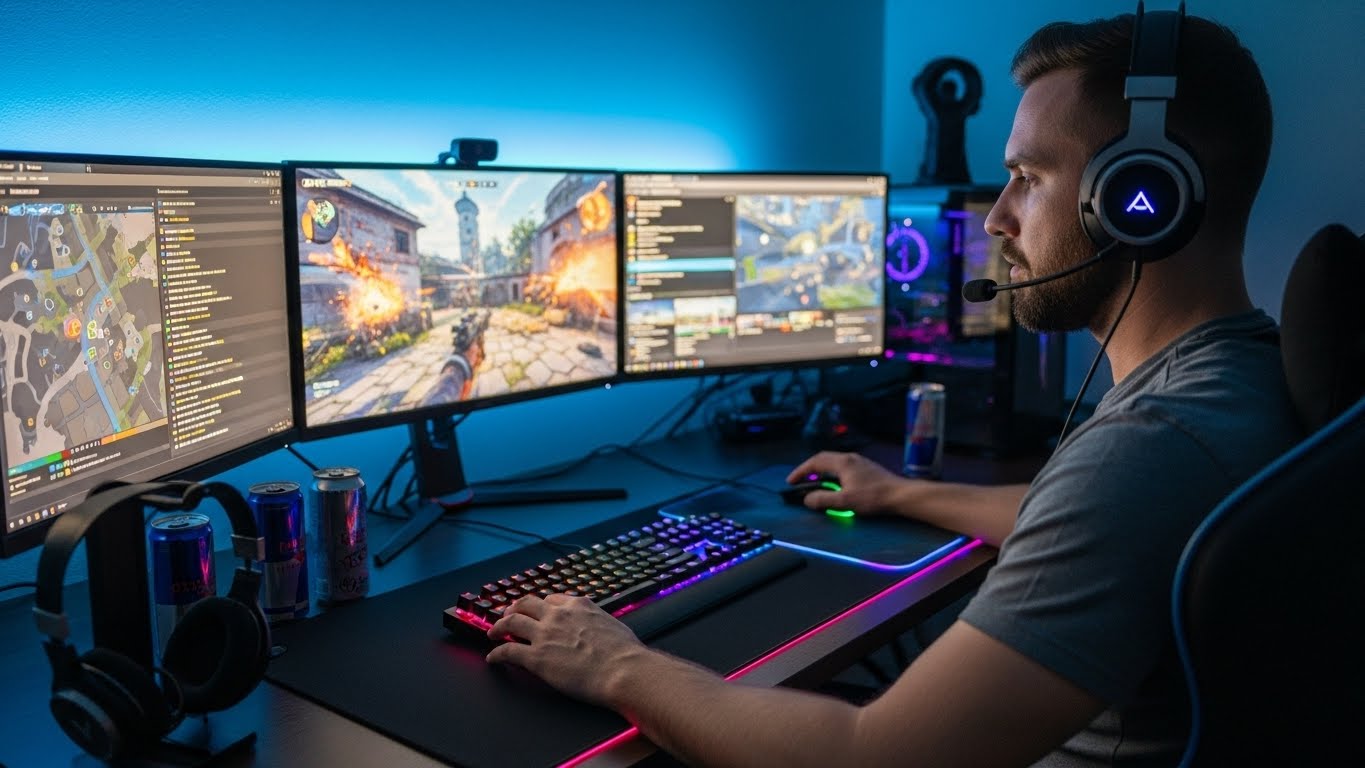
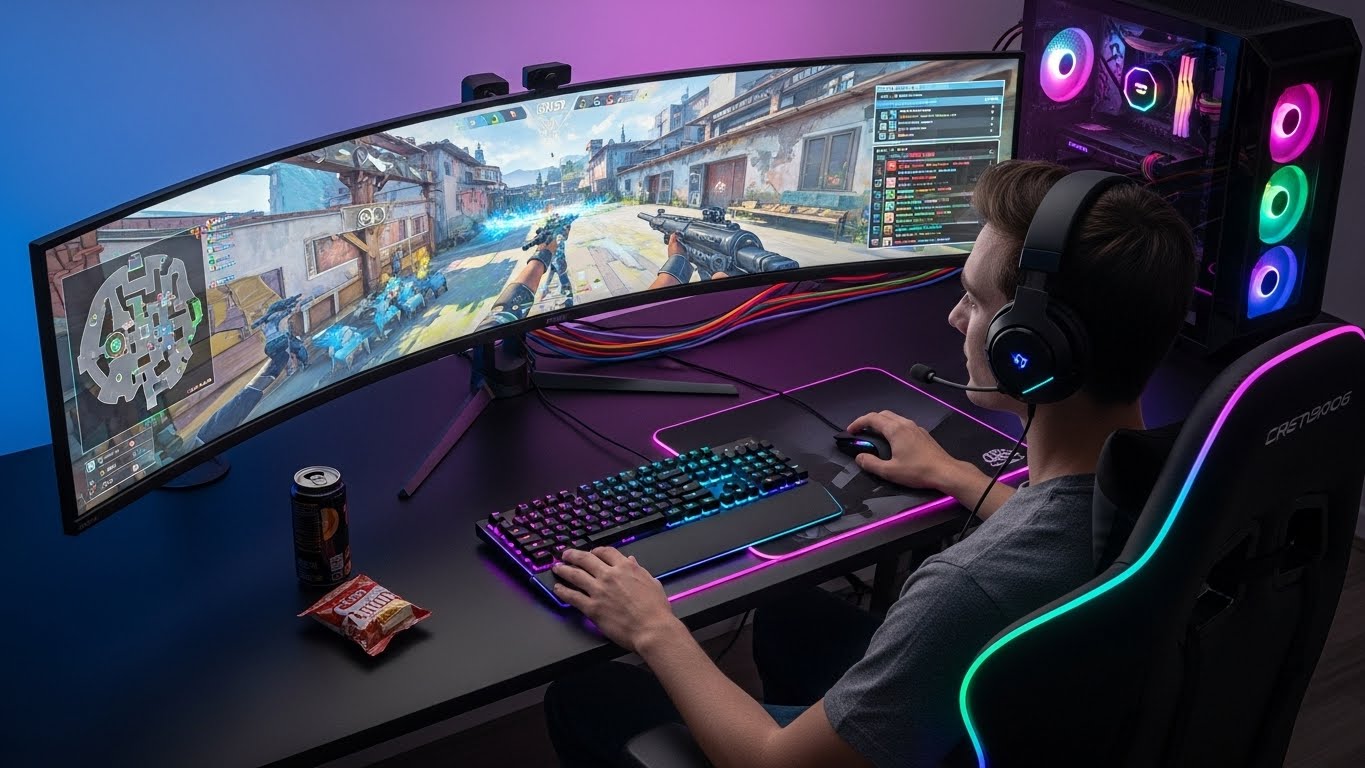
Gaming has evolved far beyond its origins as a simple pastime. From the pixelated screens of the early 1980s to today’s immersive virtual realities, gaming has become a complex, dynamic, and highly influential part of modern culture. It is no longer just a hobby; it has grown into a global industry worth billions, shaping technology, storytelling, and even social interaction. This article explores the evolution of gaming, the technological innovations driving it, its impact on society, and what the future holds for players and developers alike.
The Evolution of Gaming
The history of gaming is a story of innovation and creativity. Early video games were simple, designed for limited hardware with basic graphics and sound. Titles like Pong and Space Invaders laid the foundation for an industry that would grow exponentially. Over time, gaming shifted from arcades to home consoles, allowing players to enjoy interactive entertainment without leaving their homes.
The 1990s and early 2000s saw the rise of powerful consoles and personal computers capable of rendering complex 3D graphics. Franchises like Final Fantasy, Halo, and The Legend of Zelda demonstrated that gaming could offer intricate narratives, immersive worlds, and emotional experiences comparable to film or literature.
Today, gaming spans multiple platforms: consoles, PCs, and mobile devices. The introduction of cloud gaming and subscription-based services has made it easier than ever for players to access high-quality experiences without the need for expensive hardware.
Gaming as a Cultural Phenomenon
Gaming is no longer just entertainment; it is a cultural force. Millions of players worldwide connect through online multiplayer games, sharing experiences, strategies, and communities. Esports has turned gaming into a spectator sport, with tournaments attracting massive audiences and professional players earning significant incomes.
In addition to competitive play, gaming influences other aspects of culture. Films, music, and literature often draw inspiration from games, and vice versa. Cosplay, fan art, and streaming communities have created vibrant ecosystems where fans engage deeply with their favorite titles. Gaming culture is inclusive, creative, and constantly evolving, making it one of the most influential entertainment sectors in the world.
Technological Innovations Driving Modern Gaming
The gaming industry is heavily driven by technological advancements. Several innovations have transformed how games are developed, played, and experienced.
Advanced Graphics and Realism
High-definition graphics, realistic physics, and detailed character models have made games visually stunning. Modern engines like Unreal Engine and Unity allow developers to create worlds that feel lifelike and immersive. Realistic lighting, textures, and animation contribute to the sense of presence and engagement, enabling players to become fully absorbed in virtual environments.
Virtual Reality and Augmented Reality
Virtual reality (VR) and augmented reality (AR) have taken immersion to the next level. VR headsets provide fully interactive experiences, allowing players to explore worlds from a first-person perspective and interact with objects in three dimensions. AR blends gaming with the real world, overlaying virtual elements on physical environments. Both technologies are expanding the boundaries of what games can offer, creating experiences that were once thought impossible.
Artificial Intelligence and Dynamic Gameplay
Artificial intelligence (AI) is revolutionizing gameplay by enabling more responsive and adaptive experiences. AI-controlled characters react intelligently to player actions, creating dynamic challenges and enhancing storytelling. Procedural generation, powered by AI, allows for infinite game worlds and unique experiences every time a player logs in.
Cross-Platform and Mobile Gaming
The rise of mobile and cross-platform gaming has made gaming more accessible than ever. Players can now enjoy the same game on a console, PC, or smartphone, with seamless synchronization of progress and achievements. This flexibility has broadened the gaming audience, attracting casual players and hardcore enthusiasts alike.
The Social Impact of Gaming
Gaming has significant social implications, influencing communication, collaboration, and community building. Online multiplayer games encourage teamwork, strategy, and communication skills. Many players develop strong bonds with teammates and friends through shared experiences, tournaments, and collaborative challenges.
Streaming platforms have further enhanced the social dimension of gaming. Gamers can share their gameplay in real-time, interact with viewers, and build online communities. Content creators turn games into entertainment for audiences, blending performance, commentary, and interactivity. Gaming is no longer just a solitary activity; it has become a medium for connection, learning, and expression.
Gaming and Education
Gaming is increasingly being recognized for its educational potential. Games can teach problem-solving, critical thinking, and creativity. Strategy games, puzzles, and simulations challenge players to plan, analyze, and adapt. Some educational games even incorporate historical, scientific, or mathematical content, making learning interactive and engaging.
Gamification, the application of game mechanics in non-gaming contexts, is also gaining traction in education and training. Points, achievements, and challenges motivate learners, making traditional subjects more interactive and enjoyable. The skills developed through gaming, such as multitasking, decision-making, and teamwork, are transferable to real-world scenarios.
Challenges Facing the Gaming Industry
Despite its growth, the gaming industry faces several challenges. One major concern is the impact of excessive gaming. While most players engage responsibly, some may develop addictive behaviors, leading to social, emotional, or physical issues. Developers and platforms are increasingly incorporating features to promote responsible gaming, such as time limits, notifications, and parental controls.
Another challenge is inclusivity and diversity. While gaming culture is becoming more diverse, representation of different genders, ethnicities, and abilities remains a work in progress. The industry is gradually moving toward more inclusive narratives, characters, and community standards, but there is still room for improvement.
Monetization models also pose challenges. Microtransactions, loot boxes, and subscription services can enhance revenue but sometimes lead to criticism for promoting excessive spending or unfair advantages. Balancing profitability with player satisfaction and fairness is an ongoing concern for developers.
The Future of Gaming
The future of gaming is incredibly promising, with technology continuing to push the boundaries of what is possible.
Cloud Gaming and Accessibility
Cloud gaming promises to make high-quality gaming accessible to anyone with a stable internet connection. Players will no longer need expensive hardware, as games can be streamed directly to devices. This shift will democratize gaming, allowing more people to experience premium titles without financial barriers.
Expanding Virtual Worlds
As technology advances, game worlds will become more expansive, interactive, and lifelike. Open-world games, combined with AI-driven characters and dynamic environments, will provide unprecedented freedom and immersion. Players may shape storylines, influence game ecosystems, and create entirely unique experiences within these virtual universes.
Integration with Other Entertainment Mediums
Gaming is increasingly intersecting with other entertainment sectors. Movies, music, and live events are integrating with gaming platforms to provide multi-dimensional experiences. Cross-media storytelling, live concerts in virtual worlds, and interactive narratives are becoming part of the gaming landscape, blurring the lines between different forms of entertainment.
Ethical and Sustainable Gaming
The future of gaming will also focus on ethical and sustainable practices. Developers are prioritizing fair play, data privacy, and inclusive representation. Sustainable practices, such as energy-efficient servers and environmentally conscious production, are becoming more common, reflecting broader societal concerns.
Artificial Intelligence and Personalization
AI will continue to personalize gaming experiences. Games will adapt dynamically to individual playstyles, preferences, and skill levels, creating a unique journey for every player. AI-driven content creation could also reduce development time while enabling highly customized worlds and scenarios.
Conclusion
Gaming has evolved from a simple form of entertainment into a multifaceted cultural, technological, and social phenomenon. It is a space where creativity, innovation, and interaction converge, offering experiences that are immersive, educational, and socially engaging. From high-definition graphics to virtual reality, AI-driven gameplay, and cloud gaming, technology continues to redefine what gaming can be.
As the industry grows, challenges such as responsible gaming, inclusivity, and ethical monetization will require attention. However, the future of gaming remains bright. With expanding virtual worlds, cross-platform integration, and innovative storytelling, players can look forward to experiences that are more immersive, interactive, and interconnected than ever before.
Gaming is no longer just about play; it is a transformative medium that influences culture, education, technology, and social interaction. As technology continues to advance and the gaming community continues to grow, the possibilities for innovation and entertainment are virtually limitless. The journey of gaming is far from over, and the next chapter promises to be more exciting and immersive than anything we have experienced so far.