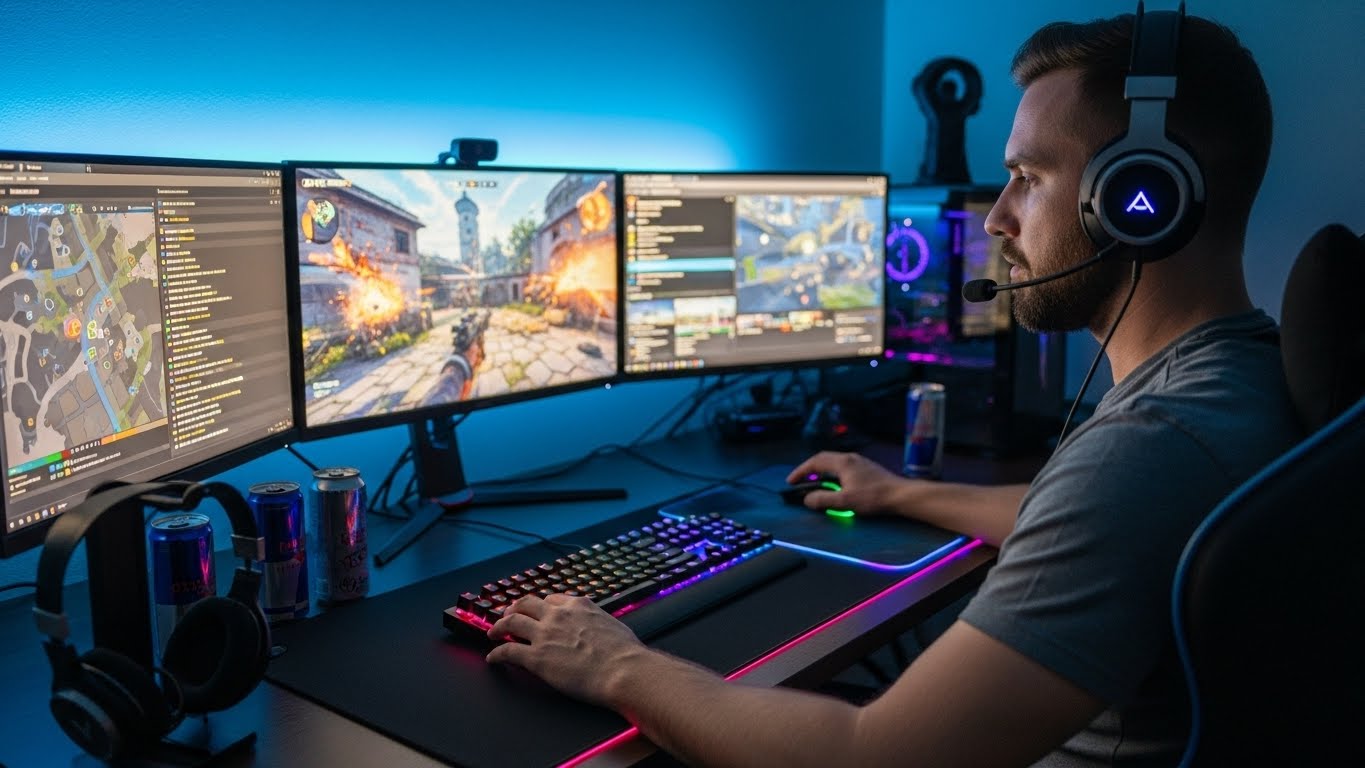

Gaming, once a niche hobby confined to arcades and early home consoles, has evolved into a global cultural force. From humble beginnings in pixelated 8-bit worlds to fully immersive virtual realities, video games have transformed into a form of entertainment that transcends generations. But what makes gaming such an integral part of our lives today? This post delves into the journey of gaming, the impact it’s had on society, and what the future holds for this ever-growing digital landscape.
The Beginnings: A New Form of Fun
The roots of gaming trace back to the 1950s, but it was during the 1970s that video games became accessible to the public. The first arcade game, Pong, launched in 1972, was a simple tennis-like game that captivated players with its simplicity and competitive edge. People flocked to arcades, drawn to the thrill of earning high scores and challenging friends. The introduction of home consoles, such as the Atari 2600 in 1977, made gaming even more accessible. Suddenly, people could enjoy the gaming experience without leaving their living rooms.
As the 1980s progressed, gaming continued to evolve, and the market grew rapidly. The Nintendo Entertainment System (NES), released in 1985, was instrumental in pushing gaming into the mainstream. It introduced iconic franchises like Super Mario Bros., The Legend of Zelda, and Metroid, all of which are still beloved today. Gaming was no longer just a pastime; it had become a cultural phenomenon.
The 3D Revolution: Bringing Games to Life
The 1990s marked a significant turning point for the industry, as the introduction of 3D graphics forever changed how games were made and played. Before 3D, games were restricted to 2D environments, limiting the player’s experience. However, with the advent of more powerful consoles like the Sony PlayStation and the Nintendo 64, developers were able to create fully realized, 3D environments.
Titles such as Super Mario 64 and The Legend of Zelda: Ocarina of Time took full advantage of these new capabilities, offering players sprawling worlds to explore and complex gameplay that went beyond jumping on platforms or defeating enemies. The ability to explore expansive environments in three dimensions gave games a new depth, both literally and figuratively, creating experiences that were far more immersive and engaging than ever before.
Online Gaming: A Global Community
By the late 1990s and early 2000s, the internet had become a common household tool, and with it came the rise of online multiplayer games. World of Warcraft, Halo 2, and Counter-Strike were some of the pioneers in creating multiplayer experiences that allowed players to compete and cooperate with people across the globe. For the first time, gaming became a social activity that connected people from different cultures, backgrounds, and continents.
Online gaming introduced the concept of digital communities—virtual spaces where players could bond over shared interests, form friendships, and even work together to accomplish goals. The advent of platforms like Xbox Live and PlayStation Network further solidified the notion of gaming as a social experience, where voice chat and in-game messaging allowed players to communicate in real time.
As online gaming grew, it also led to the rise of esports. Competitive gaming tournaments now draw millions of viewers worldwide, and players can earn sponsorships and prize money. Esports is no longer just a hobby; it’s a legitimate career for many.
Mobile Gaming: Play Anywhere, Anytime
The explosion of mobile technology in the late 2000s gave rise to a new era of gaming: mobile gaming. Smartphones became more powerful, and the rise of app stores made it easier than ever to access games. Suddenly, gaming wasn’t confined to your living room or a dedicated gaming setup. You could play anywhere, anytime, whether on the bus, in a waiting room, or during lunch breaks.
Mobile gaming brought with it a wave of new genres, such as puzzle games, casual games, and strategy games, which appealed to a broad audience. Titles like Angry Birds, Candy Crush Saga, and Clash of Clans became instant sensations, with millions of players worldwide. For many, mobile games were an entry point into the world of gaming, especially for those who may have never picked up a traditional console or PC game.
The shift to mobile also saw the rise of free-to-play games, where players could download and play a game for free but had the option to purchase in-game items, lives, or upgrades. While this model sparked debates about the ethics of microtransactions, it became a dominant force in the mobile gaming industry and helped propel it to the massive success it enjoys today.
The Future of Gaming: Virtual Reality and Beyond
As technology continues to advance, the future of gaming looks increasingly exciting. Virtual reality (VR) is one of the most talked-about innovations in gaming. Unlike traditional gaming, where players are watching a screen, VR immerses them in a 360-degree world where they can interact with the environment in real-time. VR headsets, like Oculus Rift and PlayStation VR, offer players the chance to experience games from a truly first-person perspective, making them feel like they are actually inside the game world.
In addition to VR, augmented reality (AR) is another technology that is revolutionizing the gaming space. AR overlays digital elements onto the real world, allowing players to interact with both their physical environment and virtual characters. Games like Pokémon GO have demonstrated the potential of AR, and as this technology continues to improve, we can expect more innovative and interactive experiences.
Cloud gaming is another technology that promises to change the way we play games. With cloud gaming, players can stream games directly to their devices, bypassing the need for expensive consoles or gaming PCs. Services like Google Stadia and Xbox Cloud Gaming are already allowing players to access high-quality games through the cloud, and this trend is likely to grow as internet infrastructure improves.
The Social and Cultural Impact of Gaming
One of the most significant shifts in gaming over the years is its increasing social and cultural impact. Games have moved beyond mere entertainment to become platforms for social interaction, creativity, and even education. Gaming communities have become spaces where people share ideas, form lasting friendships, and express themselves in new ways.
In addition, games are now being used as a medium for storytelling, allowing developers to craft immersive narratives that rival those of film and literature. Games like The Last of Us, Red Dead Redemption 2, and Journey have proven that video games can tackle complex themes like loss, redemption, and the human condition, often leaving players with deep emotional experiences.
Moreover, games have become a tool for education and training, with serious games being developed to teach everything from history and science to teamwork and leadership skills. The potential for games to influence and shape culture is enormous, and their role in society is likely to continue expanding in the years to come.
Conclusion: A New Era of Entertainment
From the simple arcade games of the 1970s to the cutting-edge virtual worlds of today, gaming has evolved into an art form that continues to shape entertainment, culture, and technology. The landscape of gaming is constantly changing, driven by advances in hardware, software, and new ideas. Whether you’re playing casually or professionally, gaming is more than just a hobby—it’s a global phenomenon that connects people, sparks creativity, and tells powerful stories.
As we look ahead to the future, one thing is clear: gaming is here to stay, and its impact will only continue to grow. The world of gaming is vast, dynamic, and full of possibilities, waiting for anyone who wants to explore it.