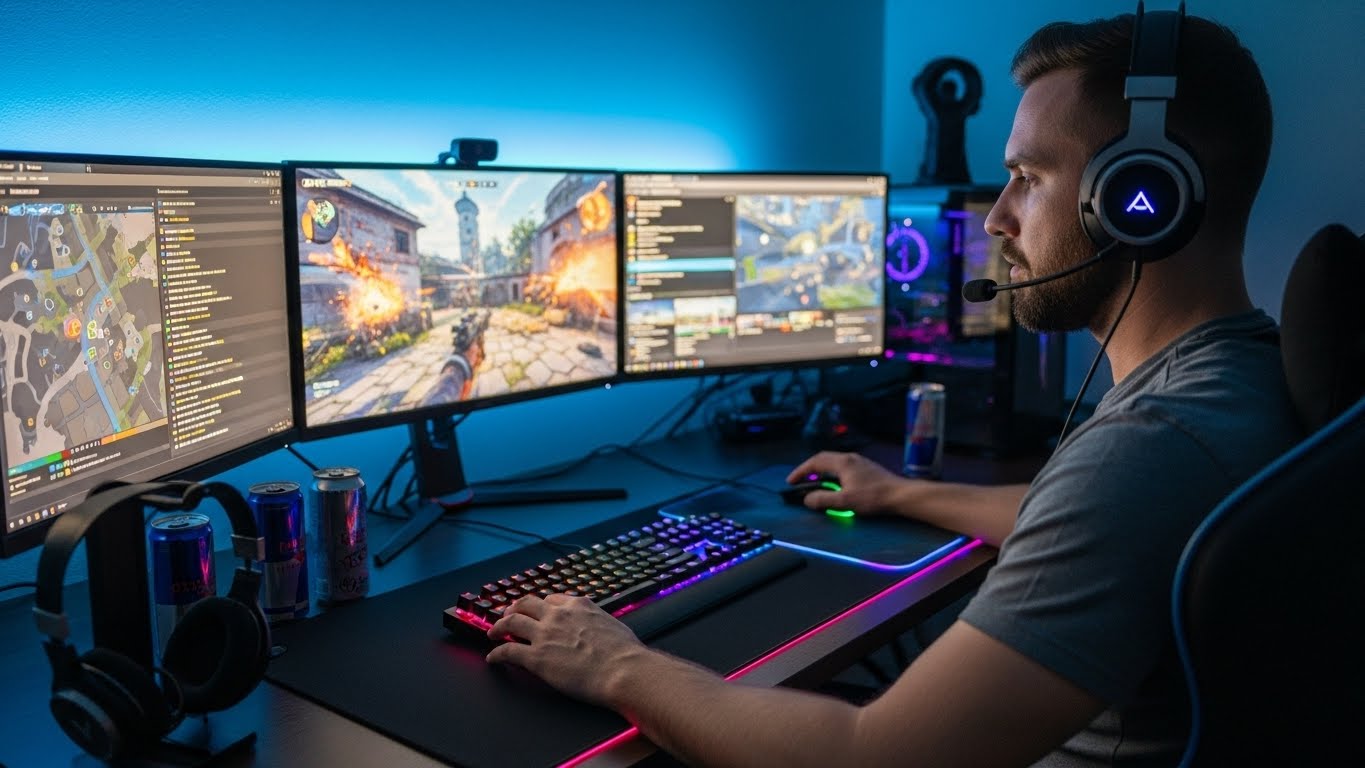
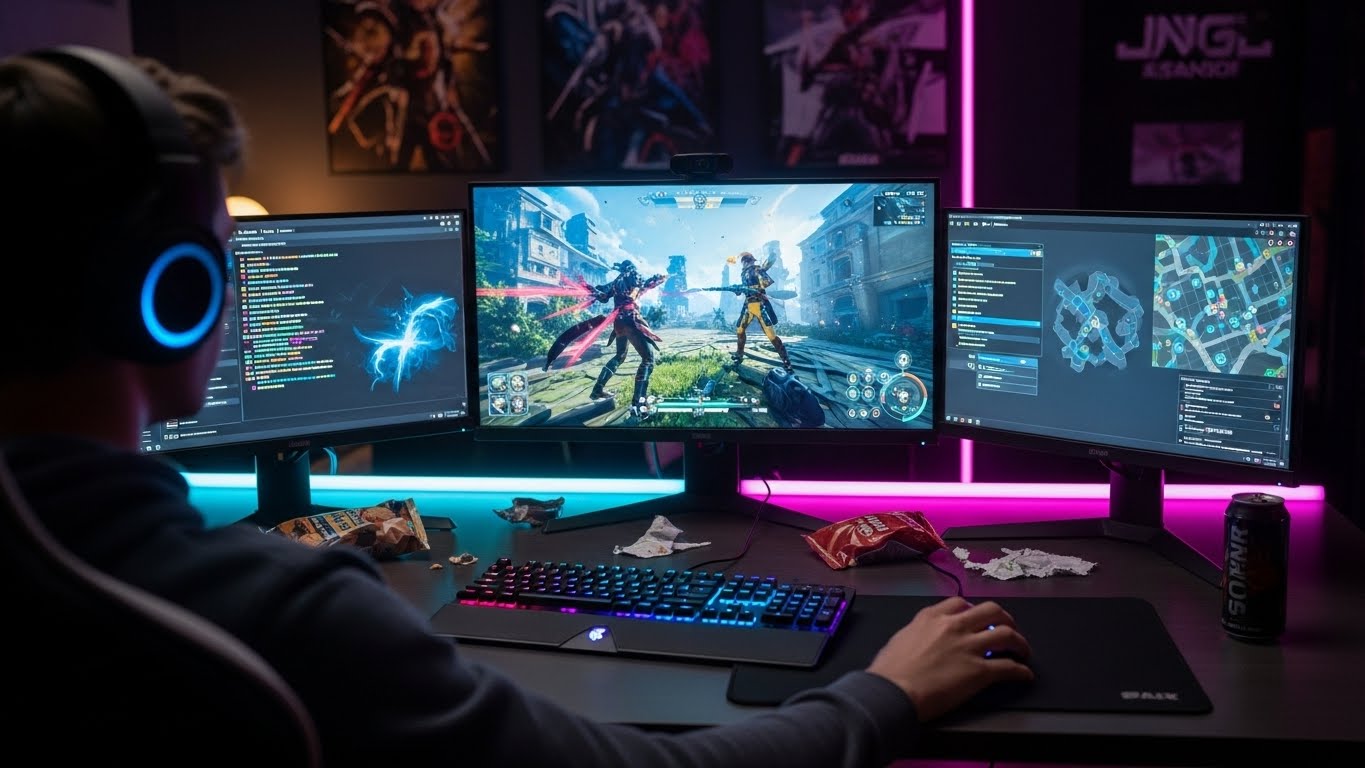
Gaming has evolved from simple, pixelated screens to immersive worlds that captivate millions of players worldwide. What started as a hobby has become a global industry, a cultural phenomenon, and a technological frontier. Today, gaming is more than entertainment—it’s a medium that educates, connects, and challenges players in ways that no other form of media can. This blog explores the history of gaming, its various types, technological advancements, cultural impact, social aspects, challenges, and the future of this dynamic industry.
The Origins of Gaming
The history of gaming stretches back decades, beginning with simple arcade games and home consoles. In the 1970s, the release of Pong introduced the concept of interactive entertainment to the masses. Arcades became social hubs where people gathered to compete and enjoy new experiences.
The 1980s and 1990s saw the rise of home consoles such as the Nintendo Entertainment System and Sega Genesis, bringing gaming into households. Personal computers also became popular gaming platforms, offering strategy games, simulations, and early multiplayer experiences. Titles like Pac-Man, Super Mario Bros, and Doom became cultural icons, establishing gaming as a mainstream form of entertainment.
As technology advanced, gaming moved beyond basic graphics and sound to complex storytelling, realistic physics, and immersive environments. These innovations transformed gaming into a rich and diverse medium capable of engaging players on multiple levels.
Types of Games
Gaming encompasses a wide range of genres, each appealing to different interests and skill sets.
Action and Adventure Games
Action and adventure games combine storytelling with fast-paced gameplay. Players explore dynamic environments, solve puzzles, and overcome challenges. Iconic titles like The Legend of Zelda and Tomb Raider offer immersive worlds and engaging narratives that test both reflexes and problem-solving abilities.
Role-Playing Games (RPGs)
RPGs allow players to assume the roles of characters, develop skills, and make choices that impact the game world. Titles such as Final Fantasy and Skyrim provide deep narratives, character customization, and long-term engagement, offering players a sense of agency and personal investment.
Simulation and Strategy Games
Simulation and strategy games focus on planning, resource management, and creative problem-solving. Games like The Sims and Civilization challenge players to think critically, develop strategies, and experiment with complex systems in both realistic and fantastical settings.
Multiplayer Online Battle Arenas (MOBAs)
MOBAs, such as League of Legends and Dota 2, emphasize teamwork, strategy, and competitive play. Players control individual characters with unique abilities, working collaboratively to achieve objectives and outmaneuver opponents. MOBAs have created global competitive communities and professional esports scenes.
First-Person and Tactical Shooters
Shooter games, including Call of Duty and Counter-Strike, require precision, coordination, and quick reflexes. These games often feature realistic environments, team-based objectives, and intense competition, providing adrenaline-driven experiences.
Sports and Racing Games
Sports and racing games simulate real-world competitions, offering immersive experiences for fans of football, basketball, soccer, and motorsports. Titles like FIFA, NBA 2K, and Gran Turismo allow players to engage with their favorite sports in dynamic and interactive ways.
Puzzle and Casual Games
Puzzle and casual games focus on intellectual challenge, creativity, and accessibility. Games like Tetris, Candy Crush, and Sudoku develop problem-solving skills and provide relaxation and entertainment for players of all ages.
Technological Advancements in Gaming
The rapid growth of gaming has been fueled by technological innovation, transforming how games are designed, played, and experienced.
Graphics and Visual Realism
Advances in graphics, lighting, and physics engines have created highly realistic and visually stunning game worlds. Modern titles feature lifelike characters, dynamic environments, and cinematic cutscenes, enhancing immersion and storytelling.
Virtual Reality (VR) and Augmented Reality (AR)
VR and AR have introduced immersive experiences that engage players in three-dimensional, interactive worlds. VR headsets allow players to physically explore virtual environments, while AR overlays digital elements onto the real world, creating unique gameplay experiences.
Artificial Intelligence (AI)
AI enhances gameplay by creating realistic non-player characters, dynamic difficulty adjustments, and adaptive storytelling. AI-driven systems allow games to respond intelligently to player actions, creating personalized and engaging experiences.
Mobile and Cloud Gaming
Mobile gaming has made games accessible on smartphones and tablets, allowing players to enjoy entertainment on the go. Cloud gaming enables high-quality streaming without the need for expensive hardware, broadening accessibility and connecting global communities.
Esports and Streaming Platforms
Esports has transformed gaming into a spectator sport, with professional players competing in tournaments watched by millions online. Streaming platforms like Twitch and YouTube Gaming have created interactive communities, allowing viewers to engage with content creators and participate in shared experiences.
Cultural Impact of Gaming
Gaming has become a cultural force, influencing art, storytelling, and social interaction. Games explore complex themes such as identity, morality, and society, offering players opportunities to experience alternative perspectives.
Gaming communities foster social interaction, collaboration, and friendship. Online multiplayer games, forums, and social platforms connect players worldwide, creating shared experiences that transcend geographical boundaries. Gaming conventions and tournaments celebrate creativity, competition, and cultural exchange.
Educational and Cognitive Benefits
Gaming offers cognitive, educational, and developmental benefits. Strategy and puzzle games enhance critical thinking, problem-solving, and decision-making skills. RPGs and narrative-driven games develop creativity, empathy, and storytelling abilities.
Educational games introduce concepts in science, history, and mathematics in interactive ways, motivating students and making learning enjoyable. Simulation games develop planning, management, and organizational skills, preparing players for real-world challenges.
Social Interaction and Community Building
Gaming provides social interaction through online multiplayer platforms, co-op modes, and competitive events. Players collaborate, communicate, and compete, developing teamwork, leadership, and communication skills.
Streaming platforms and content creation allow players to build communities around shared interests. Gamers can broadcast gameplay, engage with audiences, and participate in social events, transforming gaming into both an entertainment medium and a social network.
Challenges in Gaming
Despite its benefits, gaming faces challenges that require responsible engagement.
Addiction and Excessive Gaming
Excessive gaming can lead to addiction, social isolation, and physical health issues. Players must practice moderation and maintain balance between gaming and other aspects of life. Parental guidance, time management tools, and community support are essential for promoting healthy gaming habits.
Content Concerns
Violence, inappropriate content, and online harassment are ongoing concerns in gaming. Developers, platforms, and communities work to create safe and inclusive environments through moderation, parental controls, and ethical game design.
Accessibility and Inequality
High-end gaming hardware, fast internet, and premium games can limit accessibility for some players. Efforts to improve affordability, mobile compatibility, and cloud gaming options are addressing these disparities, ensuring broader participation.
The Future of Gaming
The future of gaming promises innovation, immersion, and expanded accessibility. VR and AR technologies will continue to develop, offering fully immersive experiences. AI will enable dynamic game worlds that respond intelligently to player behavior, creating personalized experiences.
Cross-platform gaming and cloud streaming will make high-quality experiences available to more players worldwide. Esports, streaming, and interactive community platforms will continue to grow, integrating social and competitive elements into gaming culture.
Blockchain technology and digital ownership may redefine in-game economies, enabling secure transactions, true ownership of virtual assets, and new business models for developers and players.
Gaming will continue to influence culture, education, technology, and social interaction, solidifying its role as a central component of modern entertainment.
Conclusion
Gaming has evolved into a dynamic, diverse, and influential industry. From early arcade games to immersive virtual worlds, gaming engages players on multiple levels—entertainment, education, social connection, and cognitive development.
Technological advancements, including VR, AR, AI, cloud gaming, and mobile platforms, have transformed accessibility, immersion, and engagement. Gaming communities foster collaboration, creativity, and global connectivity, while esports and streaming platforms create new opportunities for competition and interaction.
Challenges such as addiction, content concerns, and accessibility must be addressed responsibly. However, the benefits of gaming, including cognitive development, social interaction, and cultural impact, make it a valuable and enduring form of entertainment.
As technology continues to evolve, gaming will remain at the forefront of innovation, offering immersive experiences, community engagement, and limitless creative possibilities. Gaming is no longer just a pastime—it is a cultural phenomenon, a professional career path, and a digital universe waiting to be explored.