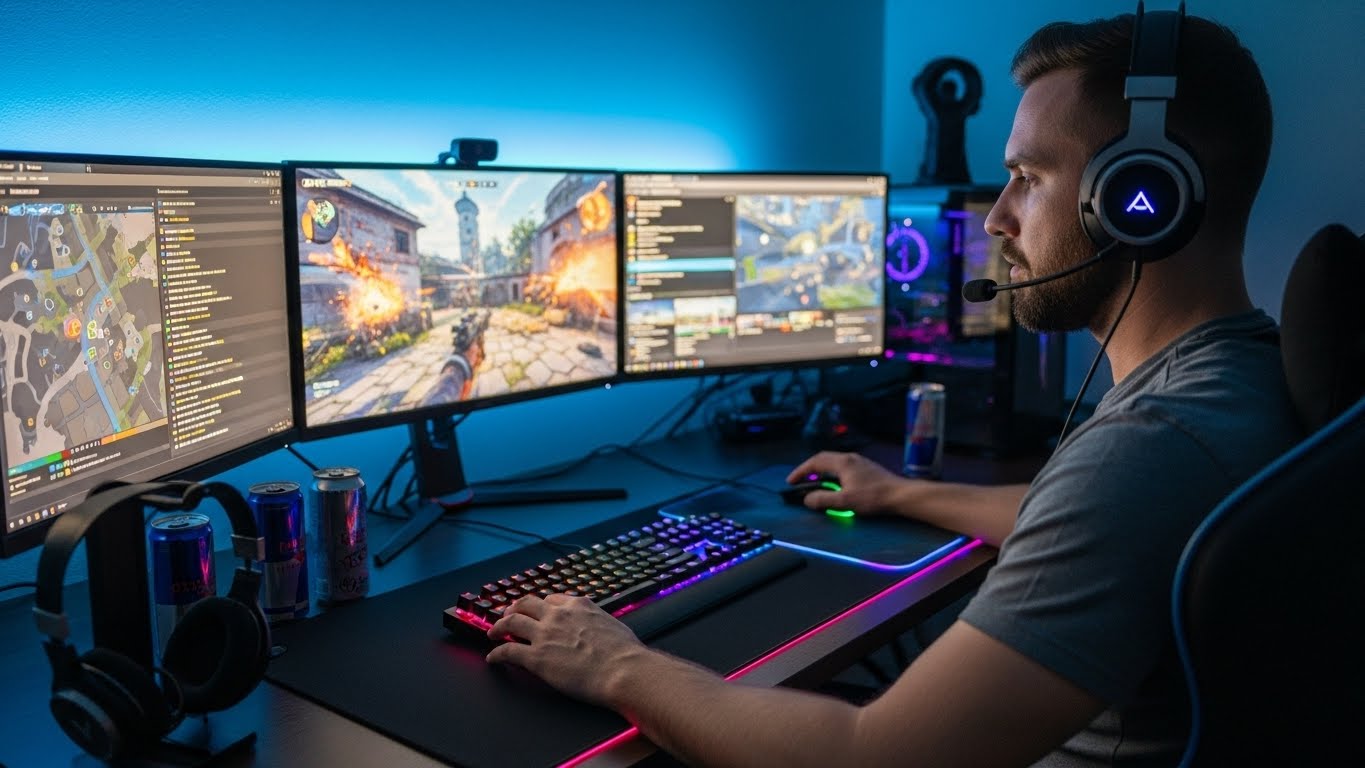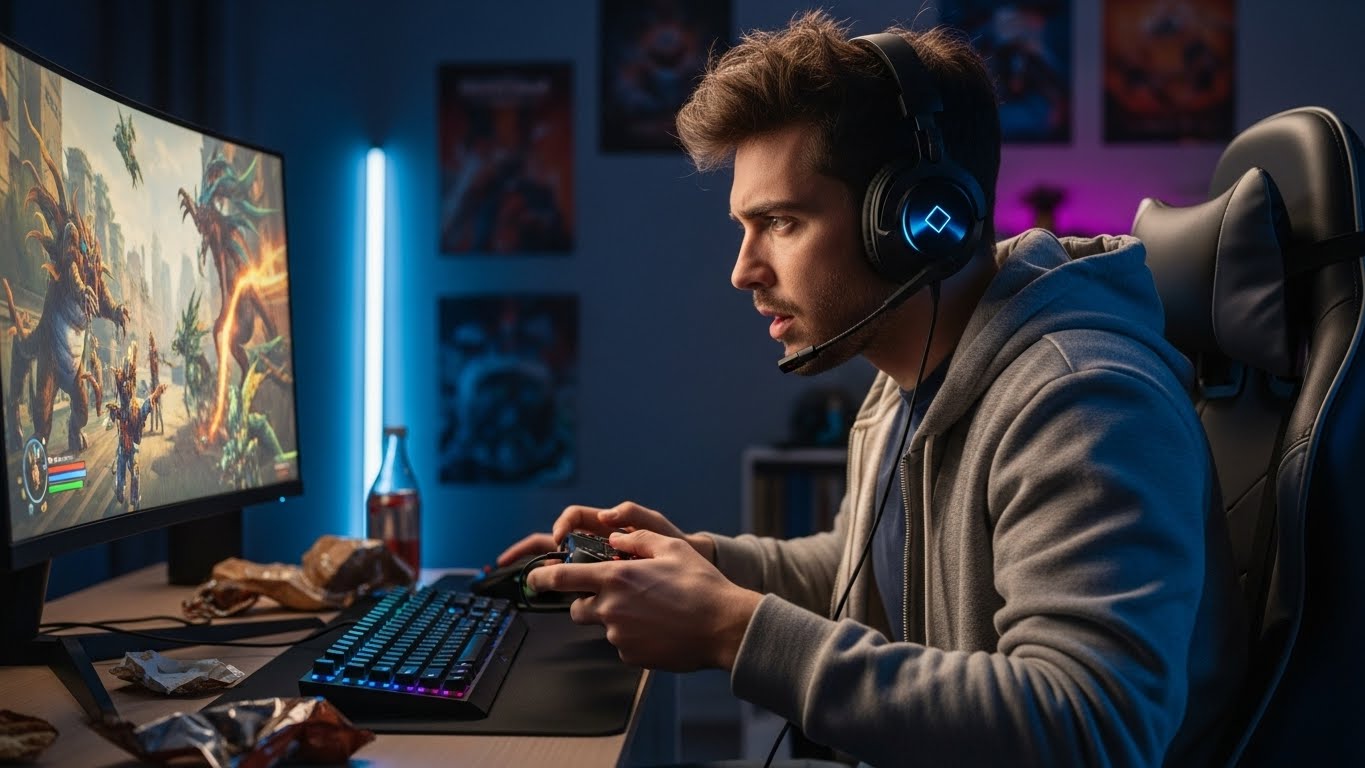

Gaming has become a global cultural force, influencing everything from social interactions to technological innovation. What was once a niche hobby has evolved into one of the most widespread forms of entertainment, attracting millions of players and spectators worldwide. In this blog post, we will explore the growth of gaming, the impact it has on individuals and society, and how it is reshaping the future of entertainment.
The Early Days of Gaming: From Arcades to Home Consoles
Gaming’s history stretches back to the 1950s, but it was in the 1970s and 1980s that the world saw the birth of arcade gaming. Machines like Pong and Space Invaders became staples in arcades, inviting players to compete for high scores and providing a sense of community as players gathered around machines. These early games were simple yet captivating, laying the foundation for what would become a global entertainment industry.
In the 1980s, home gaming consoles like the Atari 2600 and Nintendo Entertainment System (NES) brought video games into living rooms around the world. With the release of iconic games like Super Mario Bros., gaming started to gain widespread popularity. It wasn’t just about playing anymore; it was about escaping into new worlds, experiencing captivating narratives, and solving puzzles or battling enemies. The foundation for the modern gaming industry was being set, and it would continue to evolve rapidly in the years to come.
The Explosion of PC Gaming and the Rise of Online Communities
As the 1990s rolled around, the gaming world saw a major shift with the rise of personal computers. PC gaming became a major player, offering more advanced graphics, complex gameplay, and modifiable content. Popular titles like Doom, Warcraft, and StarCraft marked the beginning of a new era of gaming—one that was more expansive and immersive.
Simultaneously, the internet began to take off, and with it came the birth of online multiplayer gaming. Titles such as Diablo II and Counter-Strike allowed players to connect with others around the globe in real-time, creating virtual communities that transcended geographical borders. This was a game-changer for the gaming industry, as it led to the rise of global gaming networks and the emergence of professional esports.
Online communities became the backbone of the gaming experience, where players could form teams, share tips, or simply chat while playing. Games were no longer solitary experiences but rather social platforms where people could meet and interact with others who shared their passion.
The Mobile Gaming Revolution: Gaming in Your Pocket
In the 2000s, mobile gaming began to gain traction with the advent of smartphones and tablets. The rise of mobile apps like Angry Birds and Candy Crush made gaming more accessible than ever before. No longer confined to a console or PC, players could now enjoy games on-the-go, during commutes, or while relaxing at home.
The convenience of mobile gaming revolutionized the industry, bringing casual games into the mainstream. These games often feature simple mechanics, quick gameplay loops, and are easy to pick up and put down. Mobile games have not only captured a wide audience but also introduced gaming to a new demographic—those who may not consider themselves traditional gamers. This massive expansion of the gaming audience helped solidify gaming as a major form of entertainment.
The Rise of Esports: Gaming as a Professional Sport
One of the most exciting developments in gaming over the last two decades has been the rise of esports. Competitive gaming, where professional players compete in organized tournaments, has transformed gaming from a pastime into a legitimate sport. Titles like League of Legends, Dota 2, and Fortnite have spawned competitive leagues, attracting huge audiences both online and in stadiums.
Esports is now a billion-dollar industry, with top players earning impressive salaries and sponsorships from major brands. These players are celebrities in their own right, with massive fan followings, and events like the League of Legends World Championship draw millions of viewers worldwide. Esports has created a new avenue for gamers to turn their passion into a career, and it shows no signs of slowing down.
The growth of esports has also led to the professionalization of gaming. Teams now hire coaches, analysts, and managers, just like traditional sports teams. Training regimens have become more sophisticated, with players focusing on skill development, teamwork, and strategy. In many ways, esports is redefining what it means to be a professional athlete, blending the physical and mental demands of competition in a new and exciting way.
Gaming and Storytelling: A New Frontier for Narrative Experiences
One of the most remarkable aspects of modern gaming is its ability to tell immersive and engaging stories. Games like The Last of Us, Red Dead Redemption 2, and The Witcher 3 have elevated gaming to a level of storytelling rarely seen in other forms of entertainment. Through complex characters, rich environments, and intricate plots, these games provide players with deeply emotional experiences that rival films and literature.
Interactive storytelling has become a cornerstone of the gaming industry, allowing players to influence the narrative based on their decisions and actions. Games like Mass Effect and Detroit: Become Human allow players to make choices that affect the story’s outcome, leading to a more personalized and engaging experience. This level of interactivity blurs the lines between traditional storytelling and gameplay, providing a unique and dynamic way to experience a narrative.
As technology continues to improve, the potential for even more immersive storytelling grows. Virtual reality (VR) and augmented reality (AR) are set to push the boundaries of gaming, allowing players to step directly into the worlds of their favorite stories and interact with characters and environments in ways never before possible.
The Social Impact of Gaming: Community, Identity, and Connection
Gaming has become more than just an individual pastime—it has turned into a massive social activity that brings people together across the world. Online gaming communities have created a space where people can connect, collaborate, and form relationships. Whether it’s teaming up with friends in Overwatch or building virtual worlds in Minecraft, gaming offers a platform for socializing and shared experiences.
Games also allow players to express their identities, whether through the creation of avatars, participation in online discussions, or the exploration of virtual worlds. The gaming world has become a place where individuals can find belonging and form connections, often with people they would never have met otherwise.
Furthermore, gaming has proven to be a powerful tool for social change. Games like Papers, Please and This War of Mine explore complex political and social issues, while others are used to raise awareness for causes like mental health. As gaming continues to grow, it is likely that developers will continue to use the medium to address important societal issues and foster meaningful discussions.
The Future of Gaming: A World of Possibilities
The future of gaming is bright, with emerging technologies offering new and exciting possibilities for both players and developers. Virtual reality (VR) and augmented reality (AR) are expected to become more prevalent, providing more immersive gaming experiences. These technologies will likely transform the way games are played and experienced, allowing players to interact with game environments in ways that feel more natural and lifelike.
Cloud gaming is another trend that could reshape the future of gaming. With services like Google Stadia and Xbox Cloud Gaming, players can stream high-quality games on any device, eliminating the need for expensive consoles or high-end PCs. This will make gaming more accessible and democratize the ability to play cutting-edge games, regardless of hardware limitations.
As the gaming industry continues to evolve, the lines between gaming and other forms of entertainment, such as movies, music, and even sports, will continue to blur. The possibilities are endless, and it’s clear that gaming will remain at the forefront of entertainment for years to come.
Conclusion: Gaming as a Cultural Phenomenon
Gaming is no longer just a hobby—it is a cultural phenomenon that touches every aspect of modern life. From its humble beginnings in arcades to its present status as a global entertainment industry, gaming has evolved into a powerful medium for storytelling, social interaction, and professional competition. As technology advances and new platforms emerge, gaming will continue to shape our culture, providing new ways for people to connect, create, and experience entertainment.
Gaming is a testament to the power of interactive entertainment and its ability to adapt, evolve, and innovate. With its global reach and boundless creativity, the world of gaming is only just getting started.