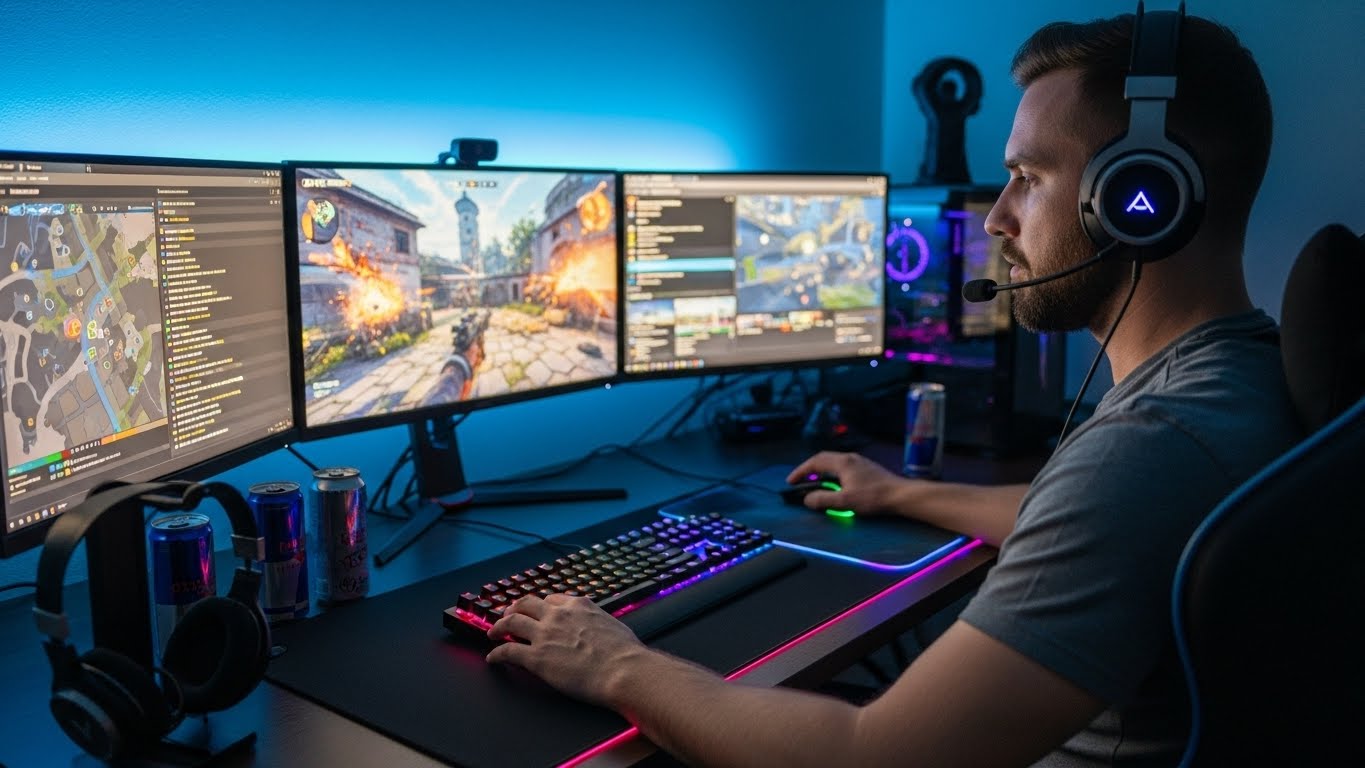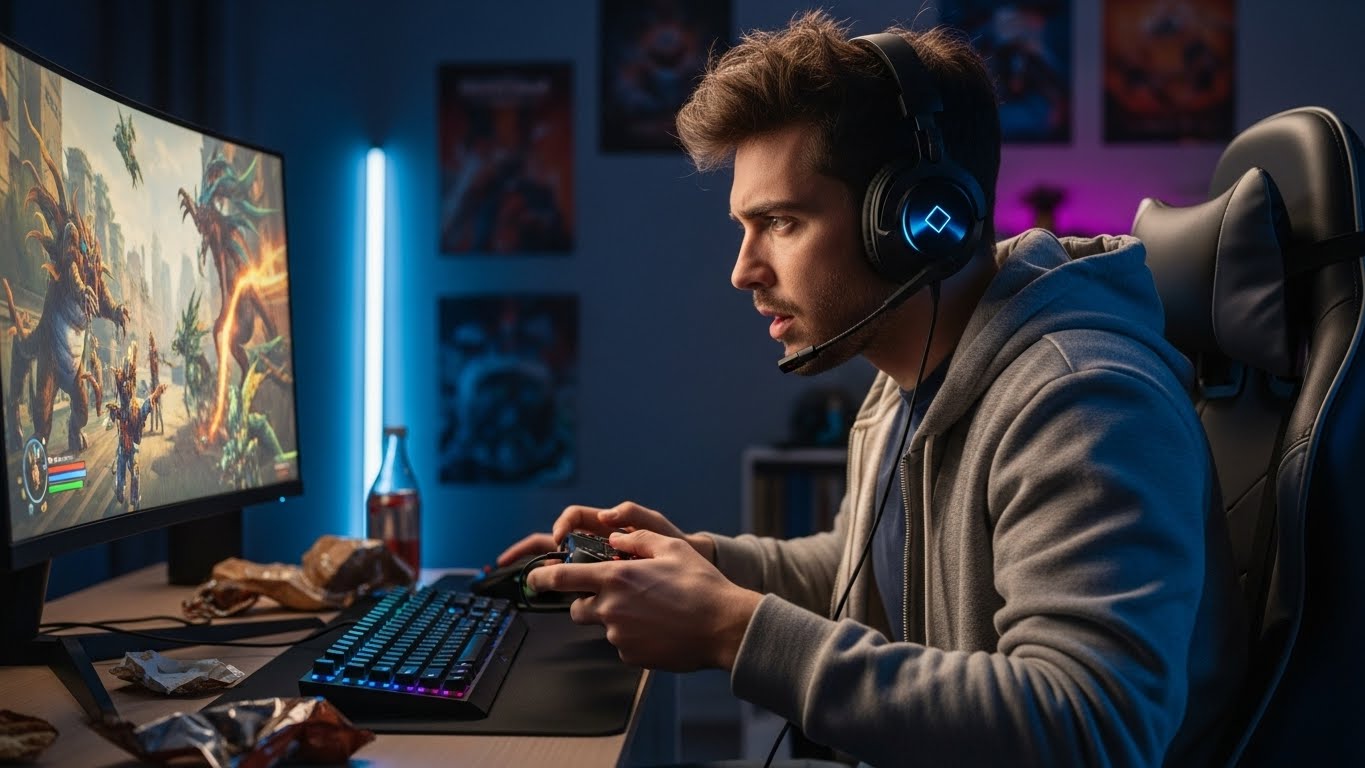
Gaming has grown far beyond its early days of pixelated screens and simple sound effects. What began as a niche hobby for a small group of enthusiasts has now evolved into a global phenomenon, shaping cultures, economies, and even the way humans connect with one another. It is an art form, a technological marvel, and for many, a way of life. This blog explores the vast world of gaming — from its humble beginnings to its revolutionary future — uncovering the passion, innovation, and imagination that make it one of the most influential industries in modern history.
The Birth of Gaming: When Pixels Met Play
The story of gaming begins in the mid-20th century when technology was still young, and computers were the size of rooms. Early games were not made for entertainment; they were experiments in programming and computing. Titles like “Spacewar!” in the 1960s set the stage for what would come next — simple yet thrilling digital experiences that captivated the imagination of young programmers and tech enthusiasts.
In the 1970s, the arcade era began. Games like “Pong,” created by Atari, transformed how people thought about entertainment. Suddenly, playing a game was not just a pastime but a social experience. Arcades became gathering places where players competed, cheered, and celebrated high scores. The simplicity of early games was their strength — easy to learn but hard to master, offering a challenge that kept players returning again and again.
The Rise of Home Consoles: Gaming Enters the Living Room
The next great revolution came when gaming left the arcades and entered people’s homes. The introduction of home consoles changed the way entertainment was consumed forever. Systems like the Atari 2600, Nintendo Entertainment System (NES), and Sega Genesis brought interactive fun to the television set. Children could now play whenever they wanted, no quarters required.
These early consoles gave birth to characters who would become cultural icons. Mario, Link, Sonic, and others became household names. The games of the 1980s and 1990s combined creativity and challenge, often pushing the limits of what hardware could handle. Developers had to rely on innovation, storytelling, and clever design rather than raw graphics. Every pixel mattered, every level was crafted with care, and every soundtrack stuck in the player’s mind long after they turned the console off.
The Golden Age of PC Gaming: Freedom and Imagination
While consoles dominated living rooms, personal computers became the playground for a different kind of gamer. PC gaming allowed for complexity and experimentation. Genres like strategy, simulation, and role-playing found a perfect home on the computer. Titles such as “Civilization,” “Diablo,” and “Half-Life” changed the landscape forever.
One of the greatest strengths of PC gaming was its openness. Players could modify games, create new levels, or even design their own entirely. This gave rise to the modding community, which helped launch some of today’s biggest franchises. Games like “Counter-Strike” and “Dota” started as community projects, proving that the imagination of players could rival that of professional developers.
PC gaming also paved the way for online play. The internet connected players from around the world, transforming gaming into a shared experience. LAN parties, chat rooms, and multiplayer servers created a sense of belonging and competition that transcended borders.
The 3D Revolution: Stepping Into New Dimensions
The mid-to-late 1990s introduced one of the most significant technological leaps in gaming history: the shift from 2D to 3D graphics. This transition redefined how games looked and felt. Suddenly, worlds were not just flat screens but immersive environments where players could explore, fight, and discover.
Consoles like the Sony PlayStation and Nintendo 64 brought 3D gaming into millions of homes. Games such as “Super Mario 64,” “Final Fantasy VII,” and “Tomb Raider” showcased the potential of 3D worlds. Players could now roam vast landscapes, solve puzzles in three dimensions, and experience cinematic storytelling unlike anything before.
This era also marked the birth of voice acting, dynamic music, and complex narratives in games. Developers began to see gaming as an art form — one that could evoke emotion, suspense, and wonder. The line between movies and games started to blur.
Online Gaming: The Age of Connection
The early 2000s brought a new chapter in gaming — the online revolution. Broadband internet made it possible for players to connect globally without leaving home. Massive multiplayer online games, or MMOs, became cultural landmarks. “World of Warcraft,” for instance, wasn’t just a game; it was a living world where millions of players built friendships, alliances, and memories.
Online gaming also fueled competition. Esports emerged as a legitimate sport, with professional players, teams, and tournaments attracting millions of fans. Titles like “Counter-Strike,” “StarCraft,” and “League of Legends” turned skilled gamers into celebrities. Watching others play became as entertaining as playing yourself, leading to the birth of streaming platforms and gaming influencers.
This era also deepened gaming communities. Forums, social media groups, and online guilds allowed players to share experiences, strategies, and art. Gaming was no longer a solitary activity — it was a culture.
Mobile Gaming: The Game in Your Pocket
As smartphones became an everyday necessity, gaming found its newest and most accessible platform. Mobile games transformed how people viewed the medium. What was once considered a pastime for “gamers” became a global hobby for everyone. Titles like “Angry Birds,” “Candy Crush,” and “Clash of Clans” showed that gaming could fit into any schedule — during a commute, a break, or even a quiet evening at home.
Mobile gaming’s success lies in its simplicity and accessibility. Anyone with a phone can play, no expensive consoles or PCs required. This democratization of gaming introduced millions to interactive entertainment. Developers learned to adapt gameplay to touchscreens, creating intuitive mechanics and quick rewards that appealed to a wide audience.
But mobile gaming also became a powerhouse industry. With microtransactions, live events, and multiplayer features, it evolved into a complex ecosystem where business, creativity, and psychology intertwined.
The Art of Storytelling in Games
Gaming has matured from pixelated adventures to deeply emotional experiences. Today, storytelling in games rivals that of film and literature. Developers use interactive narratives to immerse players in tales of love, loss, survival, and discovery. Every choice, every dialogue, and every action can shape the outcome, giving players a sense of agency unlike any other medium.
Games like “The Last of Us,” “Red Dead Redemption 2,” and “Life is Strange” have proven that video games can make players laugh, cry, and think deeply about the human condition. Storytelling in games is unique because it allows players to live the story, not just watch it unfold. They become part of the narrative, making decisions that reflect their values and emotions.
This evolution has also led to diverse representation in games. Characters now reflect a wide range of cultures, genders, and experiences, helping players see themselves in the worlds they explore. Gaming, once dominated by a narrow demographic, is now a celebration of human diversity.
The Visual and Technical Marvels of Modern Gaming
Modern gaming is nothing short of breathtaking. Advances in graphics, sound design, and artificial intelligence have created experiences that feel almost real. Photorealistic visuals, motion capture performances, and dynamic environments push the limits of imagination.
Virtual reality (VR) and augmented reality (AR) take immersion to another level. Players can step inside games, explore fantastical worlds, and interact naturally within them. The feeling of holding a sword, flying through space, or walking through a digital city brings gaming closer to reality than ever before.
At the same time, cloud gaming is changing how games are played and shared. With powerful servers handling the heavy lifting, players can stream games directly to their devices without needing expensive hardware. The barriers between players and games continue to dissolve.
Gaming as a Social Experience
Beyond the technology, gaming has become a social phenomenon. Multiplayer games and online communities create spaces for friendships, teamwork, and competition. People who might never meet in real life come together to build, battle, and celebrate victories.
Voice chat, streaming, and social media have made gaming a shared experience. Platforms where players broadcast their gameplay have turned gaming into performance art. Streamers and content creators entertain millions, fostering communities around their favorite games and personalities.
Gaming events, conventions, and tournaments bring fans together in physical spaces too. Whether it’s a local LAN event or a global championship, the sense of unity and excitement is electric. Gaming transcends language and geography — it’s a universal culture.
The Psychological Impact of Gaming
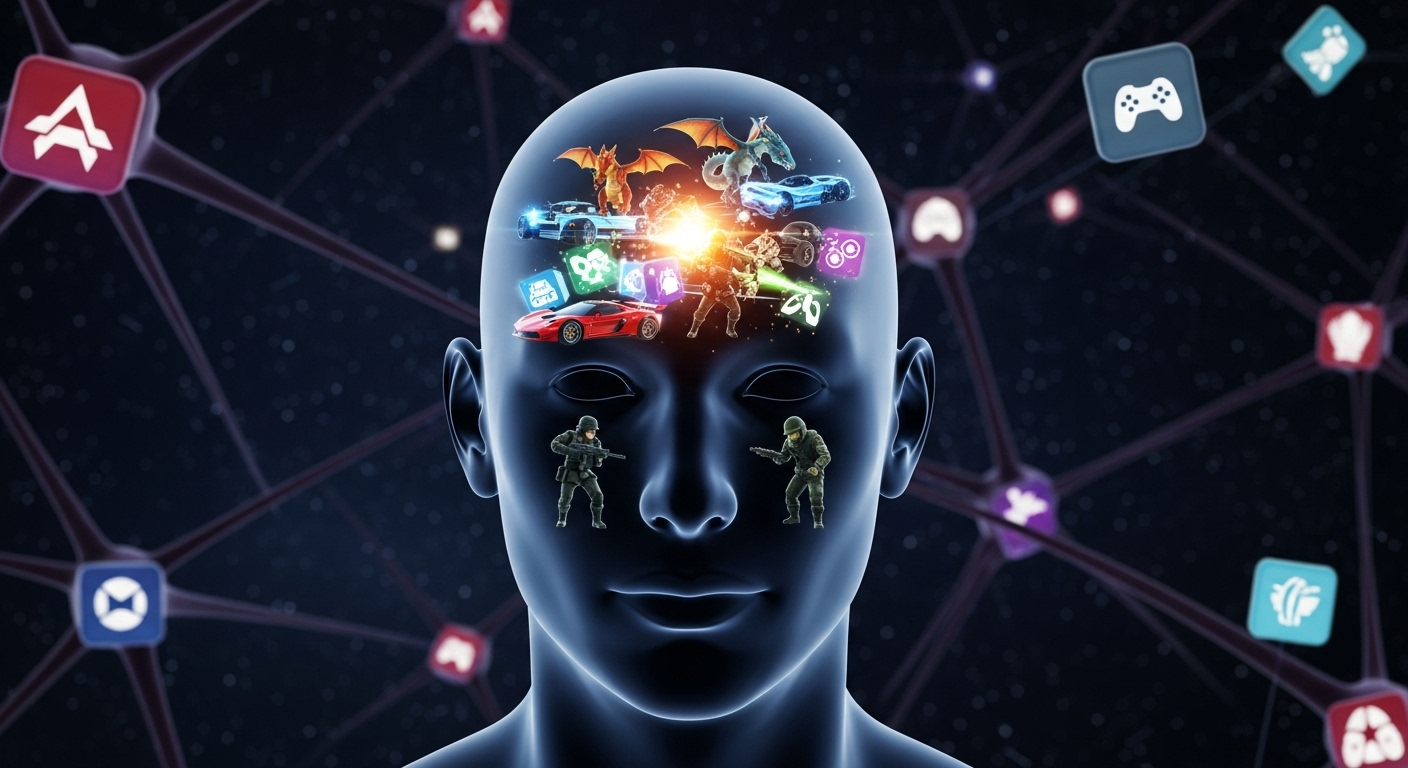
While gaming offers entertainment and connection, it also impacts the mind in powerful ways. Studies have shown that games can improve cognitive abilities such as problem-solving, memory, and hand-eye coordination. Strategy games teach planning, shooters sharpen reflexes, and puzzles enhance logical thinking.
Moreover, gaming provides emotional benefits. It can be an escape from stress, a way to express creativity, or a means to connect with others during difficult times. For some, games offer a sense of purpose and achievement that may be missing elsewhere.
However, like all forms of entertainment, moderation is key. Overindulgence can lead to addiction, fatigue, and social withdrawal. Developers and players alike are becoming more aware of mental health, striving to create healthy gaming habits and environments that promote balance and well-being.
The Business of Gaming: From Passion to Industry Giant
What was once a small hobbyist market has become one of the most profitable industries in the world. The global gaming market now rivals and often surpasses the film and music industries combined. With billions in revenue annually, gaming has transformed economies and job markets.
Major companies develop blockbuster titles with production budgets rivaling Hollywood films, while independent developers create innovative, heartfelt games that capture the spirit of creativity. The rise of digital distribution has opened doors for small studios, allowing anyone with talent and passion to reach global audiences.
Gaming also drives advancements in technology. Graphics cards, processors, and AI tools developed for games often find applications in other industries such as medicine, engineering, and education. The influence of gaming extends far beyond entertainment — it fuels innovation across the technological landscape.
The Future of Gaming: Infinite Possibilities
As we look to the future, gaming stands on the brink of endless possibility. Artificial intelligence promises smarter, more adaptive game worlds that respond to player choices in unprecedented ways. Virtual and augmented reality will blur the boundaries between the digital and physical realms. The metaverse — a connected virtual universe — could redefine social interaction, commerce, and creativity.
Advances in procedural generation and AI storytelling could create games that never end, worlds that evolve endlessly, and characters that truly feel alive. Cloud technology will make high-quality gaming accessible to anyone, anywhere, regardless of device or hardware limitations.
Sustainability is also becoming a focus. Developers are exploring ways to reduce the environmental impact of production and hardware manufacturing. Ethical design and inclusivity are shaping how the industry grows — ensuring that gaming remains a space for everyone.
Why We Play: The Heart of Gaming
At its core, gaming is about one thing — play. The human desire to play is ancient and universal. It connects us to our imagination, our creativity, and each other. Whether it’s a child building worlds out of blocks, a teenager competing online, or an adult exploring a digital adventure, the spirit of play remains the same.
We play to challenge ourselves, to escape, to learn, to connect, and to feel. Gaming allows us to experience the impossible, to live countless lives, and to explore worlds limited only by imagination. It’s more than entertainment — it’s expression, exploration, and emotion combined.
Conclusion: The Endless Game
The journey of gaming is one of constant evolution — from simple pixels to breathtaking virtual worlds, from solitary play to global connection. It reflects the progress of technology and the depth of human creativity. Gaming is no longer just something people do; it’s part of who we are as a culture.
As technology advances and imagination continues to flourish, gaming will keep transforming. But at its heart, it will always remain a celebration of fun, creativity, and community — a world where anyone can be a hero, a creator, or a dreamer.
Gaming is not just the future of entertainment. It’s the art, science, and soul of a generation that dares to play, to imagine, and to believe that the impossible can be achieved — one game at a time.